In short
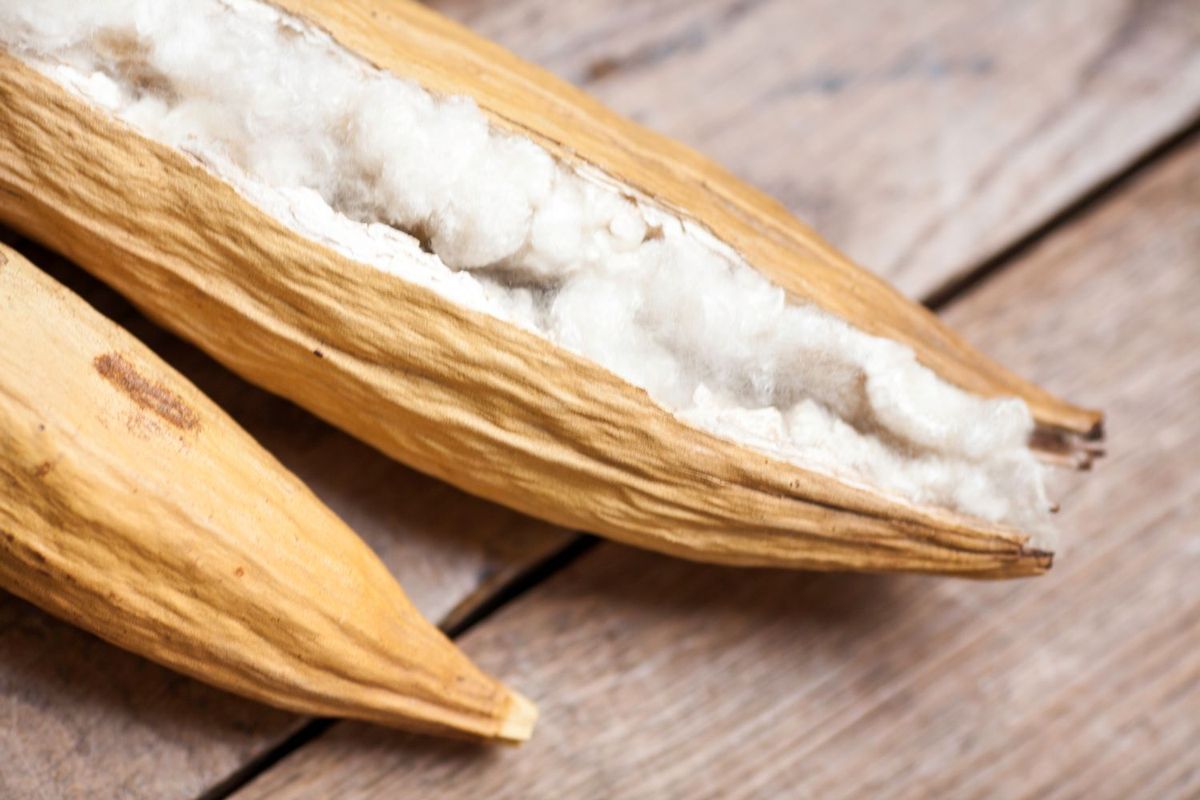
Kapok is a hollow, wax-coated seed fiber — about four-fifths air. That makes it far lighter than cotton, naturally buoyant, and water-repellent, but too short and brittle to spin on its own. Cotton is spinnable and durable; kapok is unbeatable as a lightweight, warm, water-shedding fill.
Kapok and cotton both come from seed pods, both are called "cotton" in some markets (kapok is also known as silk cotton or Java cotton), and both are 100% plant fibers. But they behave completely differently — and choosing the wrong one for your product is an expensive mistake. Here are the seven differences that matter when you're buying.
1. Weight and density
This is the headline difference. A kapok fiber is a thin-walled hollow tube filled with air, giving it a density roughly one-eighth that of cotton. For the same volume of fill, kapok weighs a fraction of what cotton does — which is exactly why it's prized for pillows, mattresses, and lightweight products.
2. Buoyancy
All that trapped air makes kapok famously buoyant — it can support many times its own weight in water. Cotton, by contrast, soaks up water and sinks. Kapok filled the world's first life vests for a reason, and it's still used in flotation and marine products today.
3. Water behavior
Each kapok fiber carries a natural waxy coating, so it sheds moisture instead of absorbing it. Cotton is highly absorbent (great for towels, bad for anything that must stay dry). Kapok's water resistance also makes it useful for oil-spill absorption — it repels water but soaks up oil.
4. Warmth and loft
Trapped air is also excellent insulation. Kapok gives high loft and quiet warmth in bedding, while staying breathable. Cotton insulates far less once compressed.
5. Allergies and hygiene
Clean, dust-free kapok is naturally inhospitable to dust mites and is generally well tolerated, which is why it's a popular fill for hypoallergenic bedding. Both fibers are natural, but kapok's dryness gives it an edge against mildew when stored properly.
6. Spinnability
Here cotton wins. Cotton fibers are long and strong enough to spin into yarn and weave into fabric. Kapok fibers are short (about 10–35 mm) and brittle, so on their own they don't spin well — they're usually blended with cotton for yarns and fabrics. If you need woven fabric, kapok is a blend component; if you need fill, kapok stands alone.
7. Price and supply
Cotton is a massive global commodity with deep, mechanized supply. Kapok is a specialty fiber, largely hand-processed and harvested once a year, so it trades as a niche material. Price depends on grade, bale size, freight, and volume rather than a single commodity index.
If your product is a pillow, mattress, comforter, insulation panel, flotation item, or oil-absorption media, kapok is very likely the better fiber — and we supply it as clean Grade A and Grade B floss, baled for export. See how the grades differ →