In short
Kapok is one of the more genuinely low-impact natural fibers: the randu tree grows without irrigation or pesticides, is never felled to harvest (only the pods are gathered), and the fiber is fully biodegradable with no plastic. The honest caveats are around transport distance and the fact that it can't fully replace spun fibers on its own.
"Sustainable" gets stamped on almost everything now, so it's fair to be skeptical. Here's an honest look at where kapok earns the label — and where the nuance is.
The tree is never cut
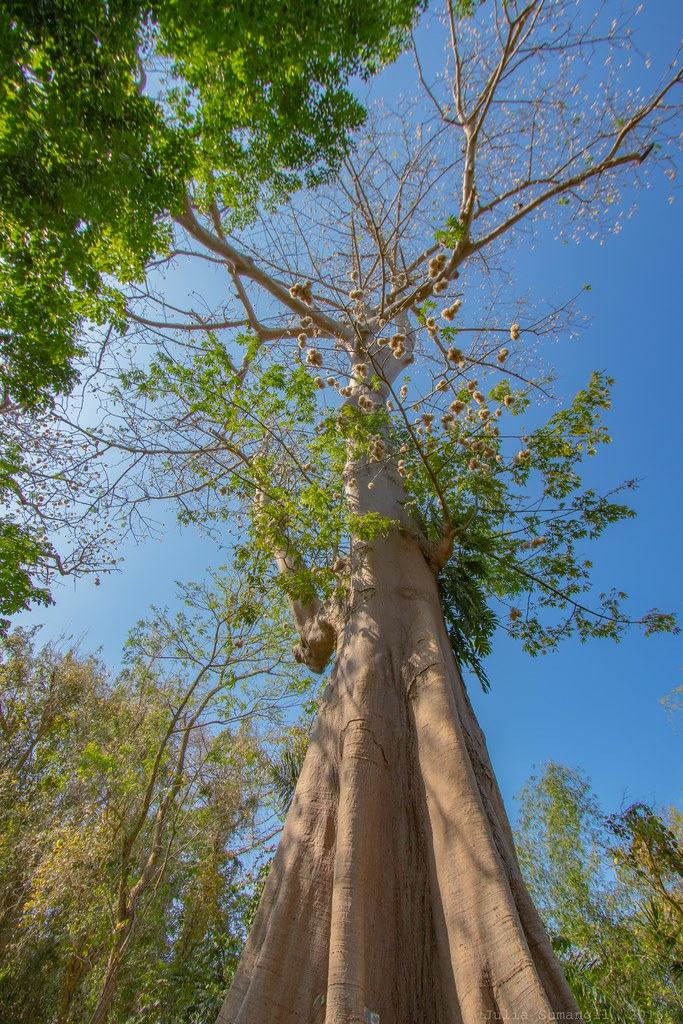
This is the strongest point. Kapok comes from the seed pods of the randu tree (Ceiba pentandra). To harvest, you gather the ripe pods — the tree keeps standing and fruits again next season, for decades. There's no clear-cutting and no replanting cycle the way there is with an annual crop.
No pesticides, no irrigation
Randu grows on land that often supports little else, and it typically needs no chemical inputs or artificial irrigation. Compared with conventional cotton — which is water- and pesticide-intensive — kapok's growing footprint is very light.
Fully natural and biodegradable
Kapok is a plant fiber start to finish: no plastics, no synthetic additives. At end of life it composts. As a natural fill, it's a genuine alternative to polyester stuffing, which sheds microplastics and doesn't break down.
A once-a-year, low-tech harvest
Kapok is gathered once a year and largely hand-processed. That keeps energy inputs low and supports rural livelihoods in the communities that grow and clean it — a social dimension of sustainability that's easy to overlook.
The honest caveats
No fiber is perfect, so here's the balanced view:
- Transport: most kapok grows in Southeast Asia, so shipping to distant markets adds transport emissions. Larger, denser bales help by moving more fiber per container.
- Not a full cotton replacement: kapok is short and brittle, so for woven fabric it's blended, not a stand-alone substitute.
- Verify the source: "natural" only means low-impact if it's actually grown and processed the traditional way. Buy from a supplier who can show you the real operation.
Want to build a genuinely natural, plastic-free product line? See how kapok compares to cotton →