In short
Grade A is the cleanest, whitest, highest-loft floss — for premium bedding and pillow fill. Grade B is a solid, economical floss for bulk stuffing, insulation, and industrial fill. Both are 100% Javanese kapok; the difference is degree of cleaning, colour, and loft — not species.
Kapok isn't graded by a single global standard the way some commodities are — grading reflects how thoroughly the floss has been cleaned, sorted, and lofted. In practice, most exporters (us included) supply two commercial grades of the same fiber. Here's what actually separates them.
What defines Grade A
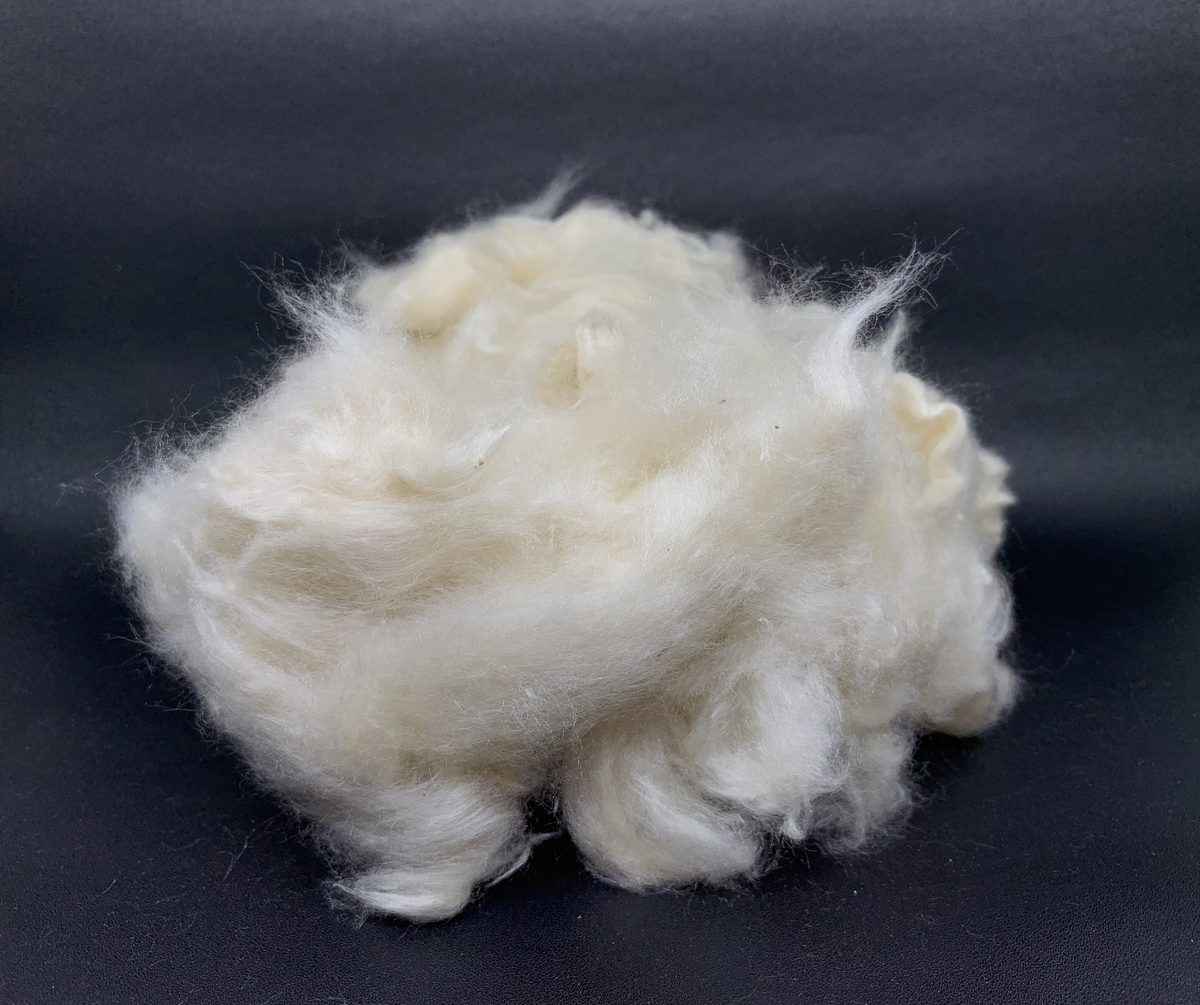
Grade A is the top of the sort: well de-seeded, low in shell and impurity, bright and uniform in colour, with high loft and a silky hand. It's what you want when the fiber is the selling point of the finished product.
- Low seed & impurity content
- Bright, uniform white colour
- High loft, silky feel
- Best for premium pillows, mattresses, comforters
What defines Grade B
Grade B is honest, economical floss. It carries a little more natural variation in colour and cleanliness, at a better price and higher yield. Where top whiteness doesn't matter — inside a cushion, a panel, or an industrial product — it's the smart choice.
- Higher yield, better price per kilo
- Ideal for bulk stuffing and industrial fill
- Suited to volume buyers
- Works for insulation, upholstery, oil-absorption media
How to choose — and why "mixed" is an option
Match the grade to where the fiber ends up. If the buyer sees or feels the kapok, or if it's marketed as premium, choose Grade A. If it's hidden inside a product and cost drives the decision, Grade B usually delivers better value.
You don't have to pick just one. Many buyers order a mixed ratio — say 60% A / 40% B — to hit a target loft and price point. Ask your supplier to blend to your spec.
Not sure which grade fits your product? Tell us the application and we'll recommend a grade or blend, with a sample spec. Then see how importing works →