StoryThe fiberProductsPod to baleExportPackingGradesUsesUpdatesKnowledgeGet a quote

Ceiba pentandra · the randu tree of East Java

The kapok fiber
that floats.

Pure Javanese silk-cotton, harvested from the seed pods of the randu tree — hollow, feather-light, water-repellent, and entirely natural. Supplied as Grade A & B, export-baled by the container.

Family-run in East Java since 1979 · Exporting since 2014

Grade A & B
Sorted or mixed
1 × 20FT
Minimum order
FOB Surabaya
East Java
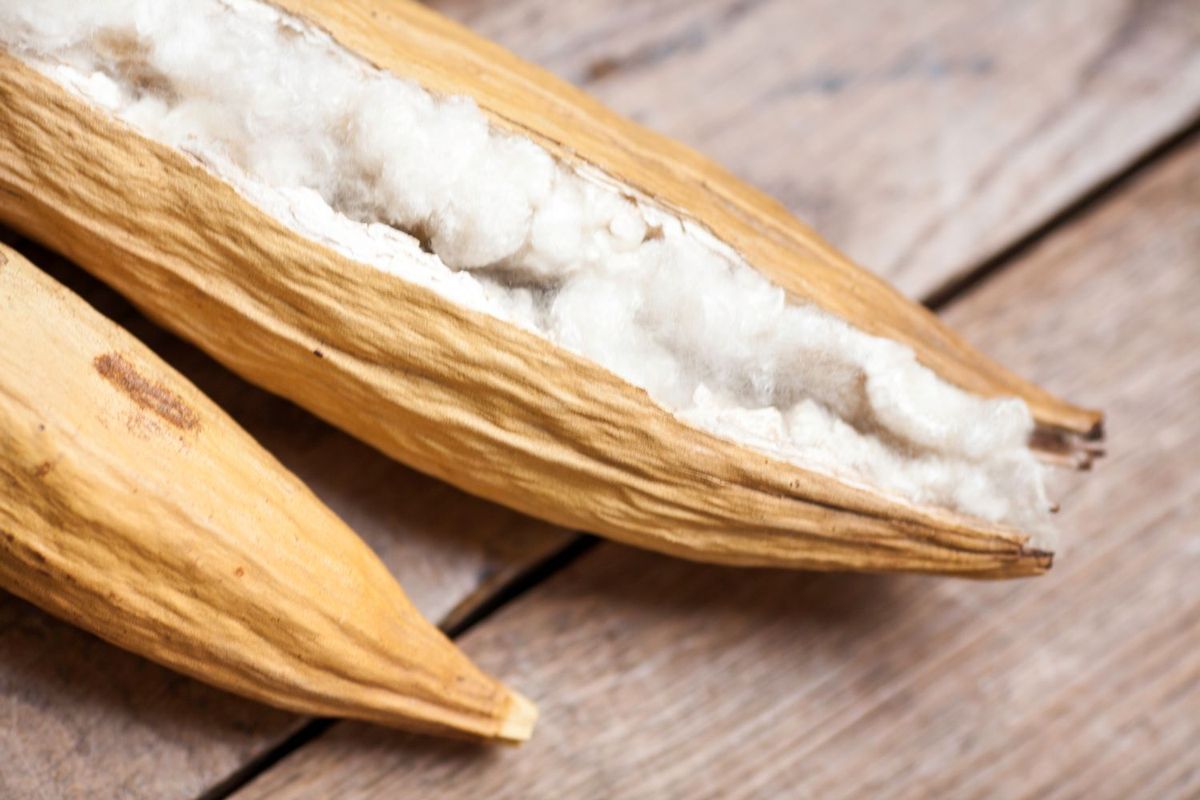
An open kapok pod revealing white silk-cotton fiberGrade A · high loft

Cotton a tree gives once a year

Cleaned, de-seeded floss — pressed into export bales at our own gudang.

Moisture8.6%
Composition100% kapok

Our story · since 1979

Three generations of kapok.

Kapok has been our family's work in East Java since 1979 — the year our grandfather founded the company as Randu Indo Prima, long before the fiber came back into fashion. (Randu is the Javanese name for the kapok tree.) For over four decades, three generations have gathered the pods, cleaned the floss, and pressed the bales, season after season.

In 2014 we opened our export arm — the first time the family's kapok left Indonesia in a container. What was built for the local market now ships to buyers worldwide, with the same hands and the same standards behind every bale.

So when you buy from us, you're not dealing with a trading desk. You're dealing with a family that has done one thing — kapok — for more than forty years.
1979
Family business founded
2014
First export shipment
3 gen
Generations of kapok
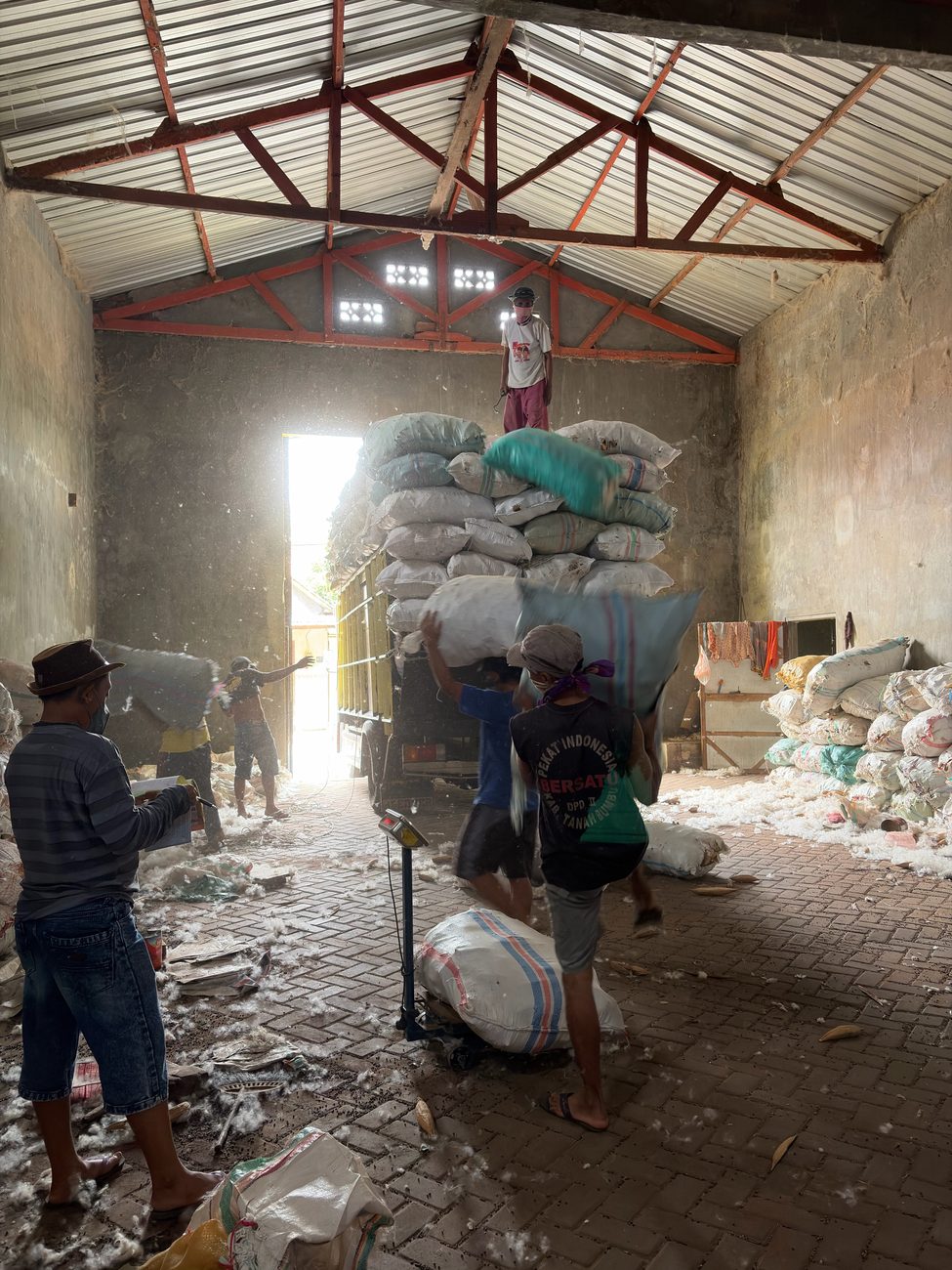
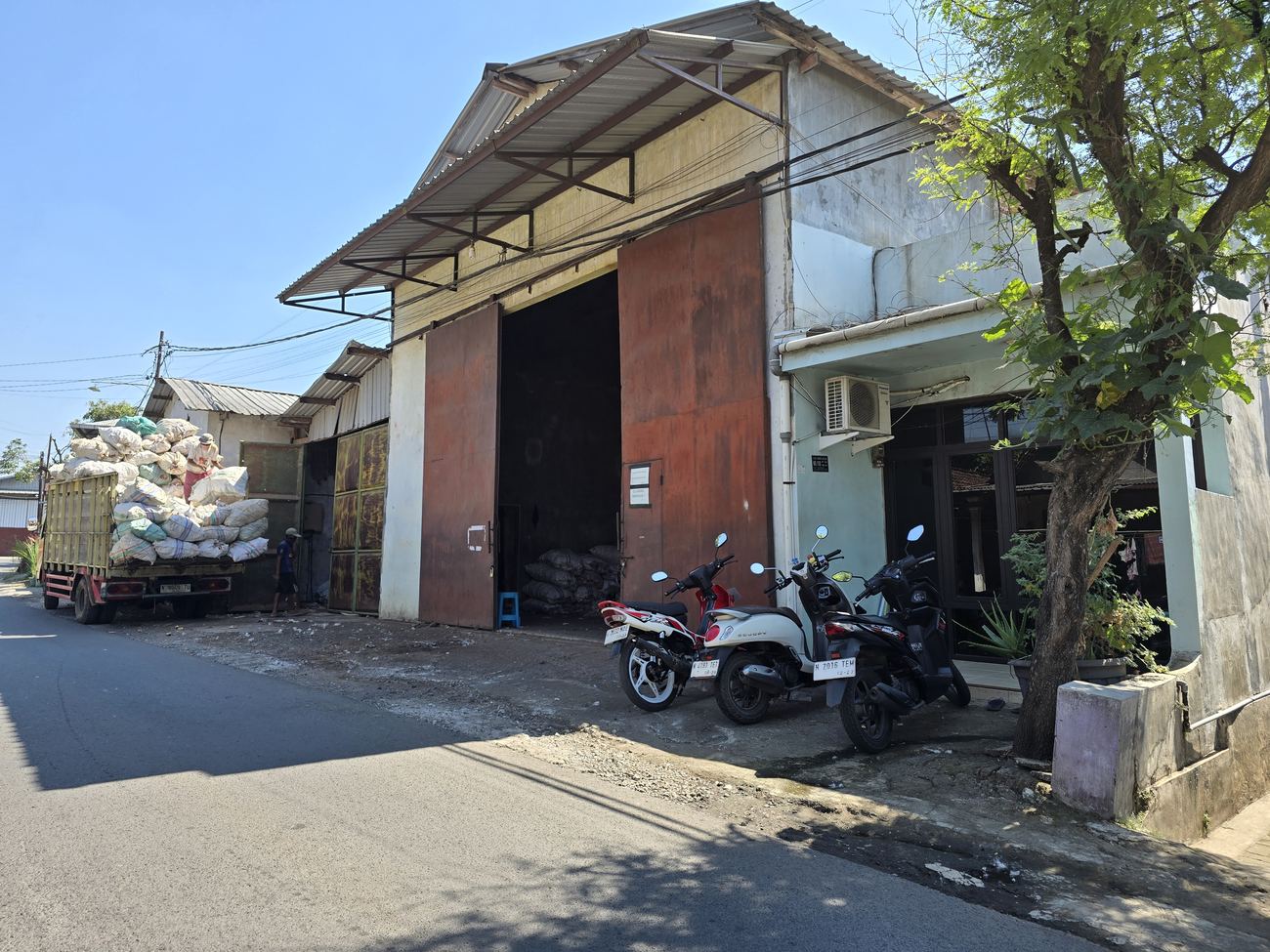
Our family kapok warehouse in East Java, loading for export

The material

Kapok: the cotton a tree gives once a year.

Kapok is the pale, silky floss inside the ripe pods of Ceiba pentandra — the giant randu tree that has grown across Java for generations. When the pods split in the dry season, they release a fiber unlike any other: each strand is a hollow tube, roughly four-fifths air, sealed by a natural wax.

That structure is what makes kapok extraordinary. It is one of the lightest natural fibers on earth, it sheds water instead of soaking it up, and it grows with no chemicals at all. The tree is never felled — only the gathered pods are harvested, season after season.

We supply it the way buyers actually use it: cleaned, de-seeded floss, sorted into Grade A and Grade B, and pressed into export bales.

An open kapok pod revealing white fiber

Why kapok

Properties no synthetic fill can copy.

The value of kapok is written into the fiber itself — its hollow core, its wax coating, its weightlessness. These are the traits buyers specify it for.

01

Hollow & weightless

Each fiber is a sealed tube of trapped air — exceptional loft and one of the lowest densities of any natural fiber.

02

Naturally buoyant

The trapped air lets it float and carry many times its own weight — the fiber that filled the first life vests.

03

Water-repellent

A natural waxy layer sheds moisture rather than absorbing it, resisting mildew when stored dry.

04

Hypoallergenic

Clean, dust-free floss that is naturally inhospitable to mites — a preferred fill for bedding.

05

Thermal insulator

All that trapped air makes kapok a quiet, breathable insulator for pillows, mattresses, and panels.

06

Fully biodegradable

A plant fiber start to finish — no plastics, no additives. It returns to the soil at end of life.

~80%
Air by volume inside each fiber
~0.3
g/cm³ — among the lightest fibers
10–30×
Own weight buoyed in water
100%
Natural & pesticide-free

From pod to bale

The real work behind every kapok bale.

Nothing here is rushed or chemically forced — the same rhythm Javanese growers have followed for generations, cleaned and graded to export standard.

This year's kapok harvest — ripe pods gathered and sacked1

Harvest

Ripe pods gathered by hand in the dry season. The tree is left standing to fruit again.

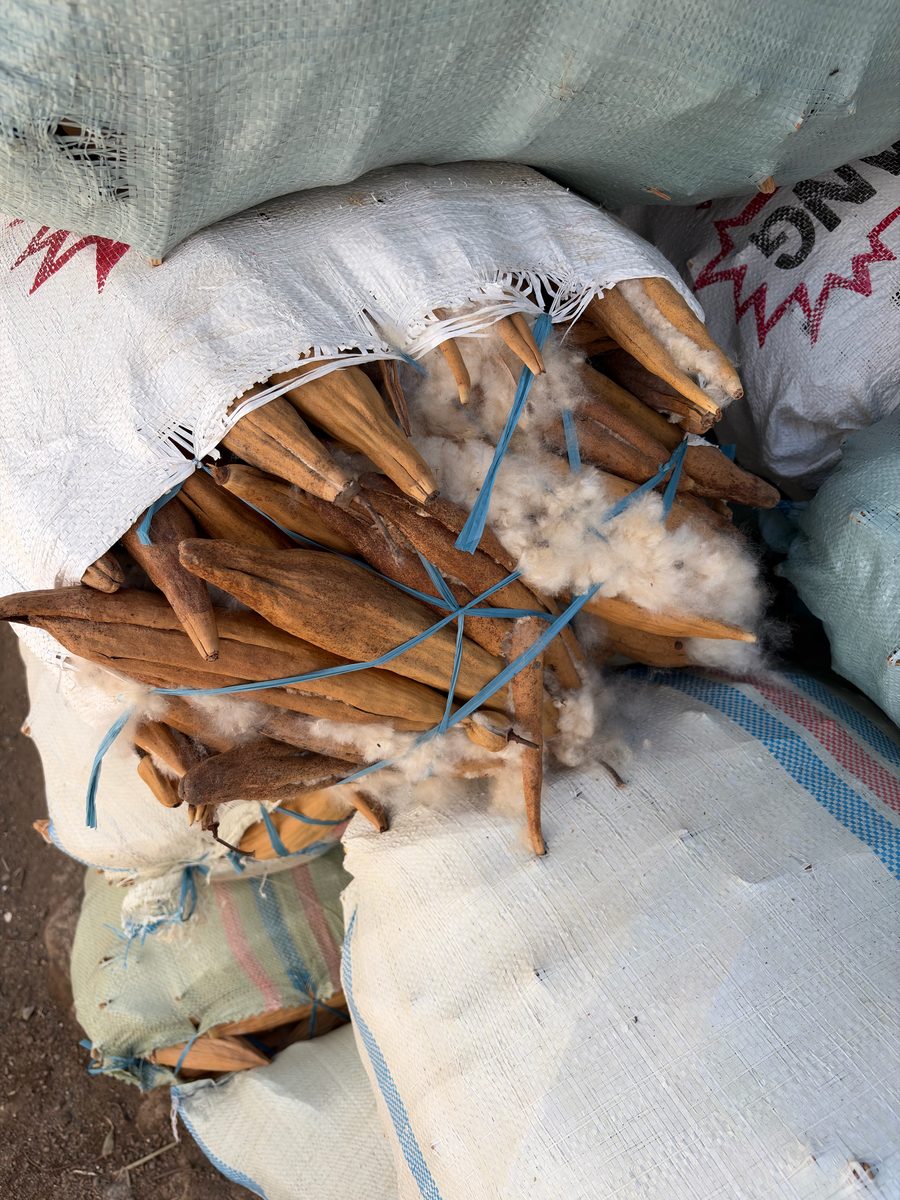
A sack of sun-dried kapok pods splitting open to reveal the floss2

Sun-dry & split

Pods dried under the sun until they open, releasing raw floss and seed.

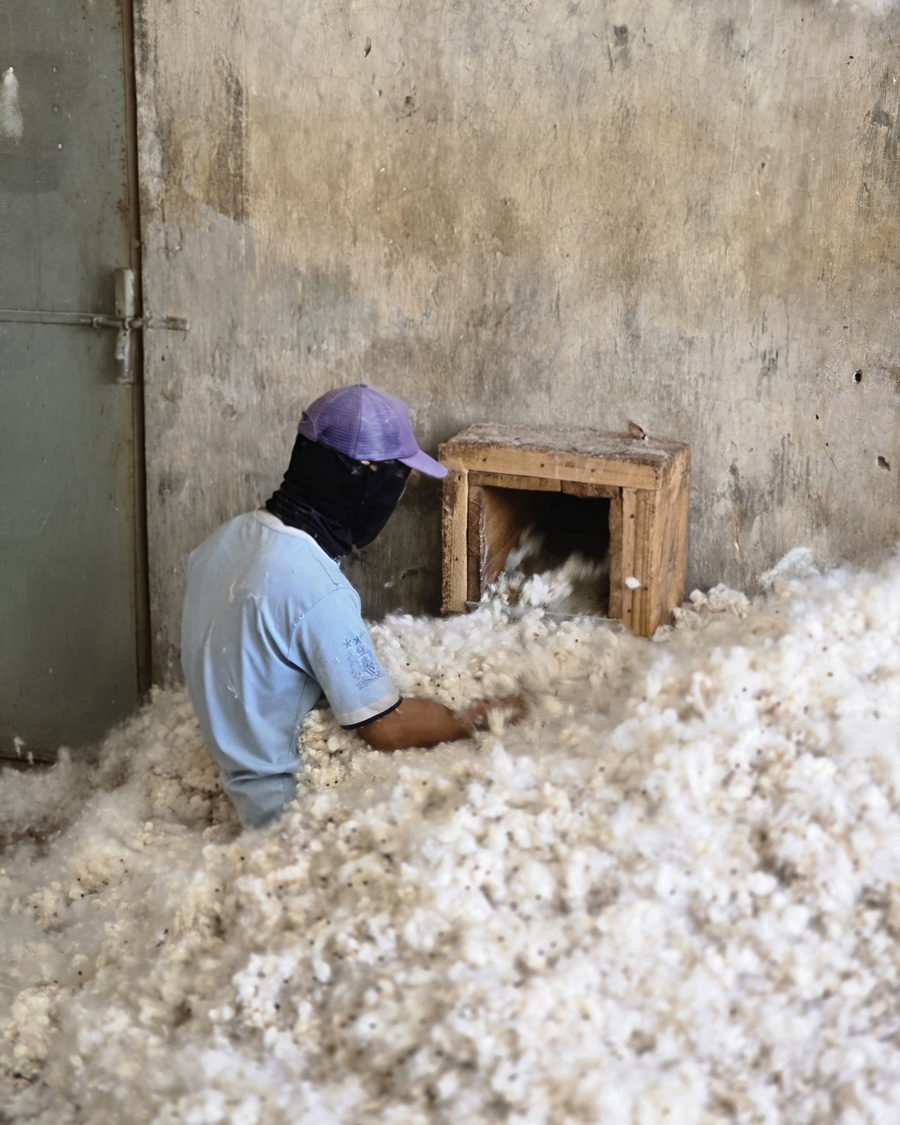
Worker feeding raw kapok floss into the cleaning machine3

Gin & clean

Raw floss fed through the gin, separating fiber from seed and shell.

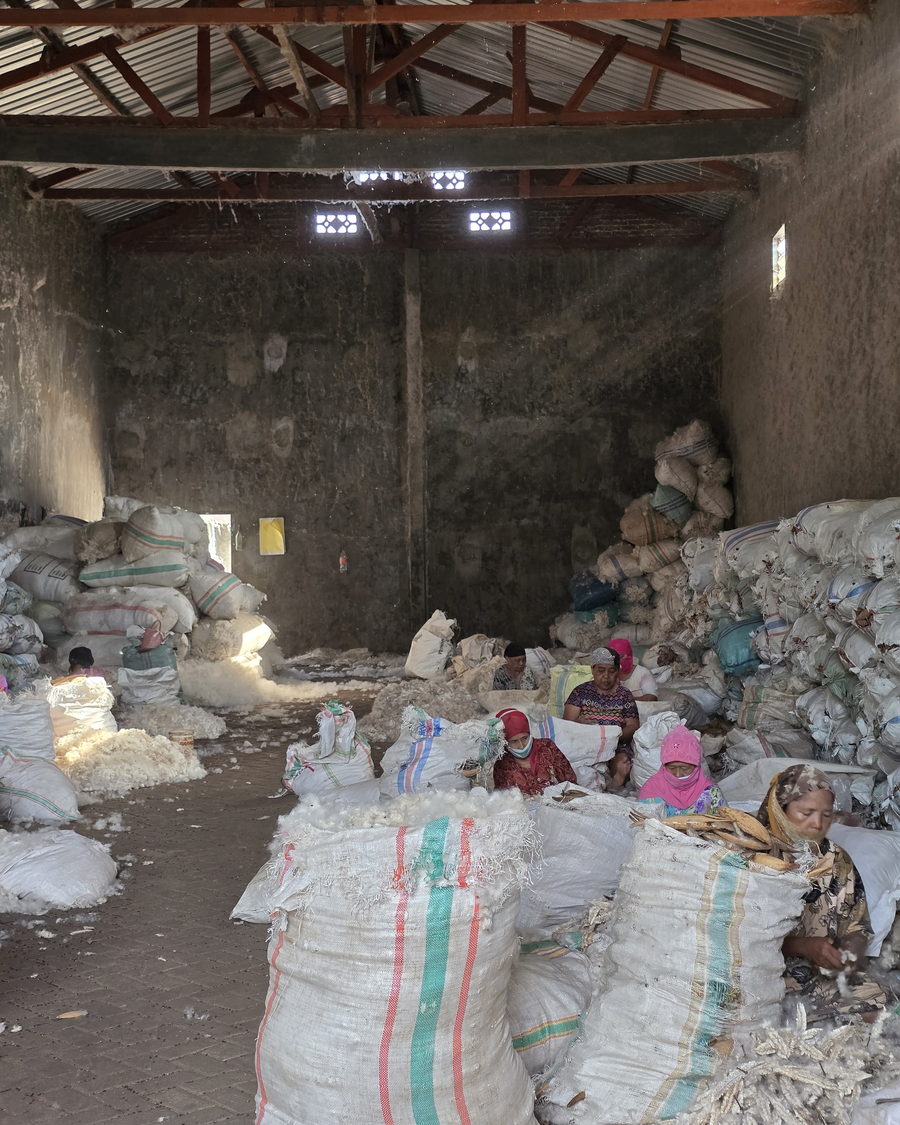
Team hand-sorting kapok fiber in the gudang4

Hand-sort

Every sack opened and picked over by hand — the slow step no machine does properly.

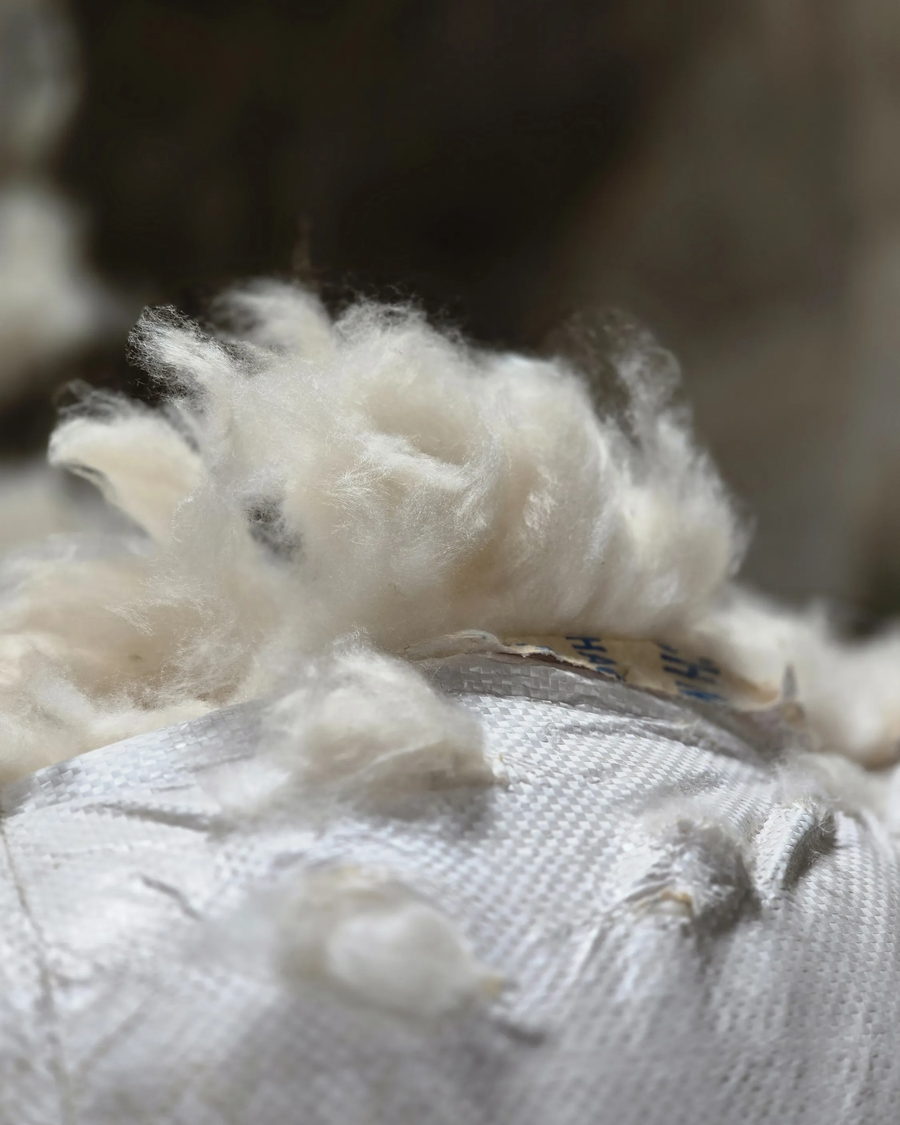
Clean high-loft kapok floss ready for baling5

Grade

Sorted into Grade A and Grade B, then moisture-checked against our SDS spec.

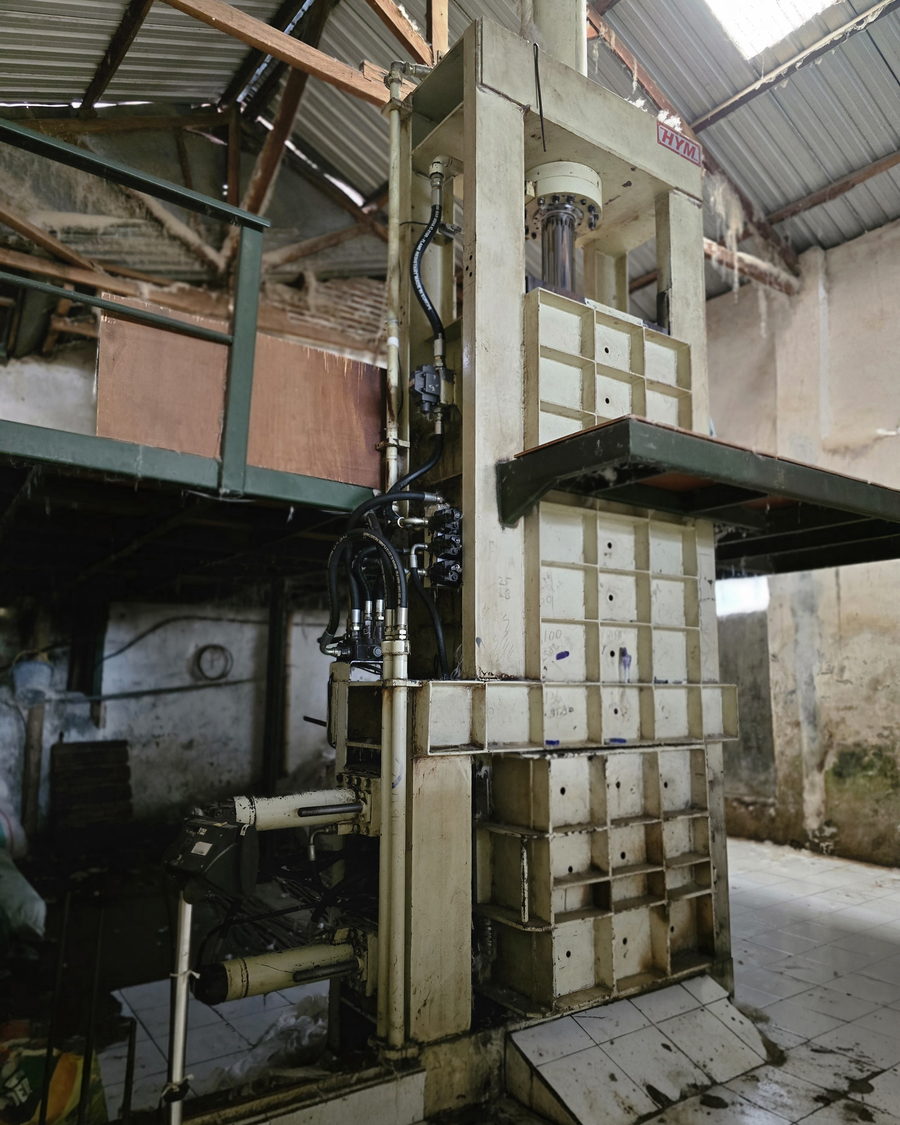
Hydraulic press compressing kapok into export bales6

Press & bale

Pressed under hydraulic load into export bales, wrapped and strapped for the container.

Inside the gudang

See how kapok moves through our warehouse.

Short film from our kapok warehouse in East Java

Our gudang · East Java

A real gudang. A real kapok operation.

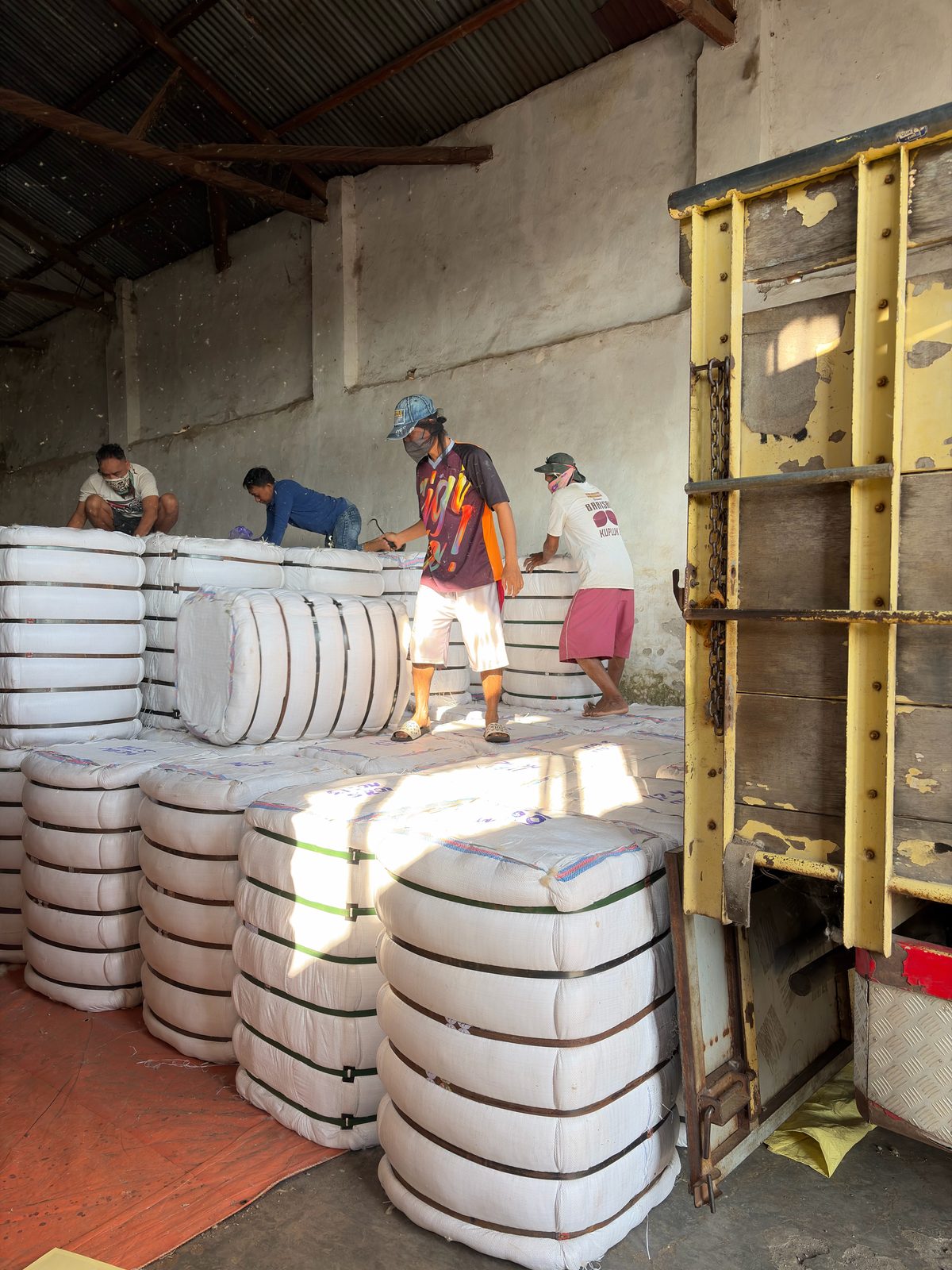
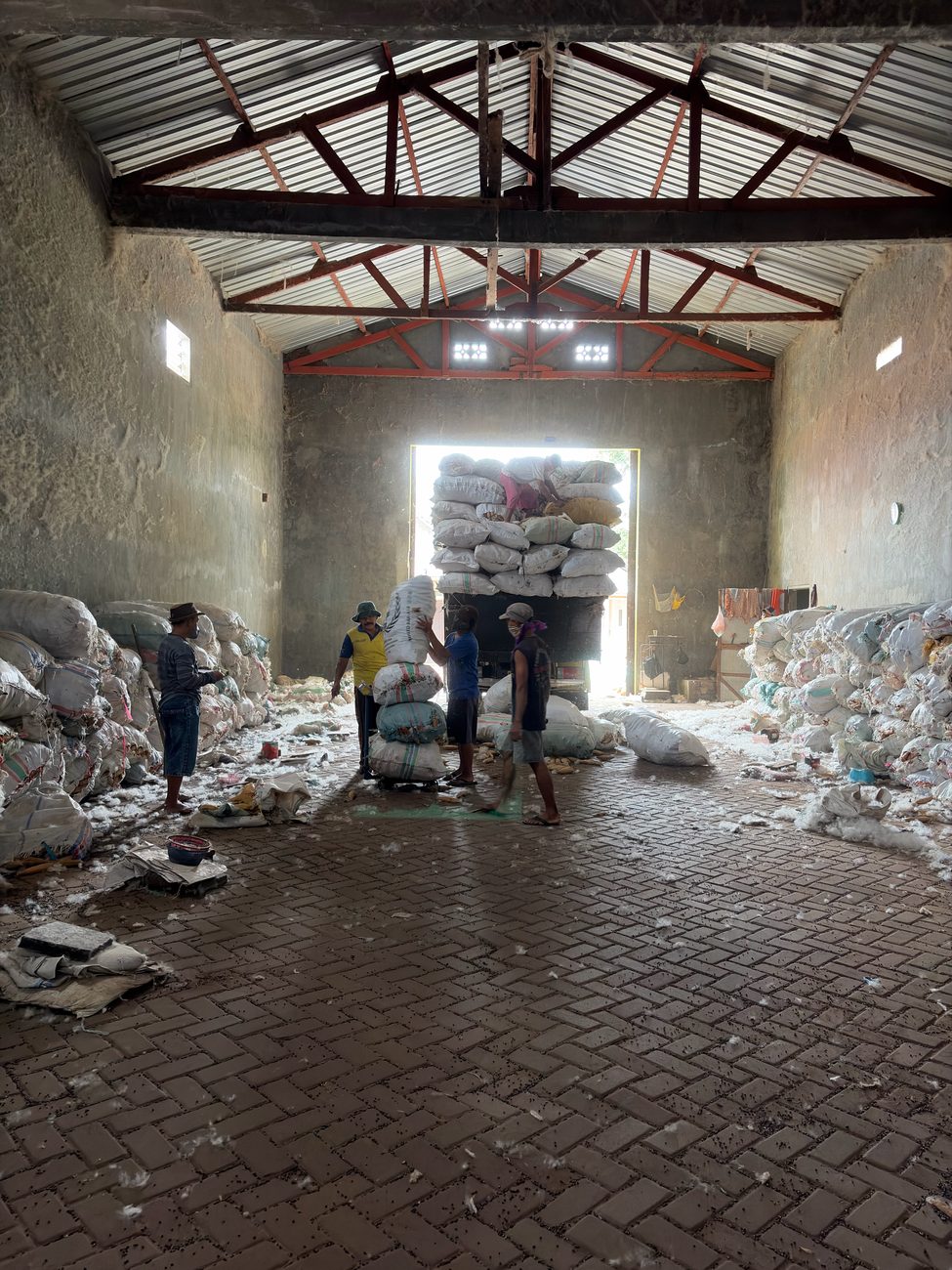
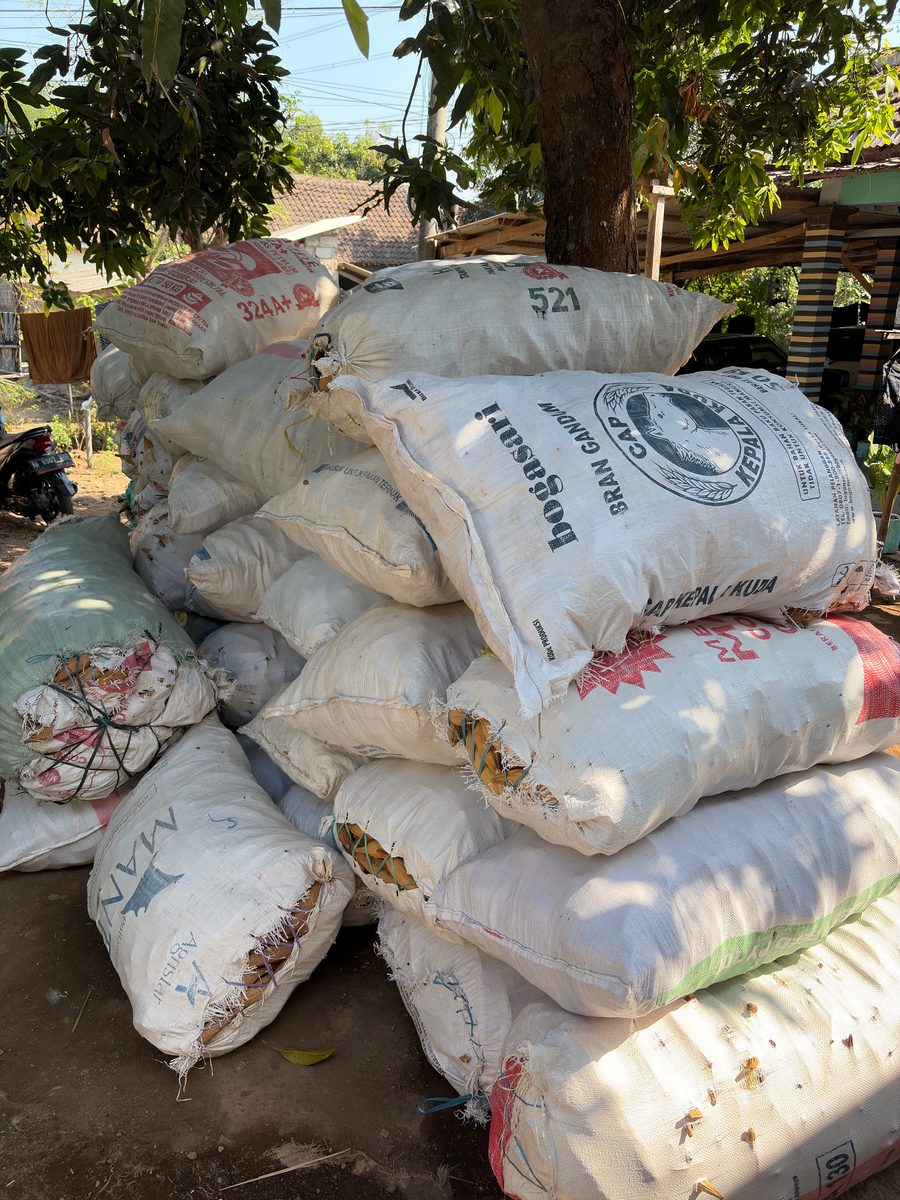
This is our warehouse in East Java — where kapok is received, dried and checked, sorted into Grade A and B, pressed into bales, and loaded straight onto trucks for the port. Not a trading page: a working supply house.

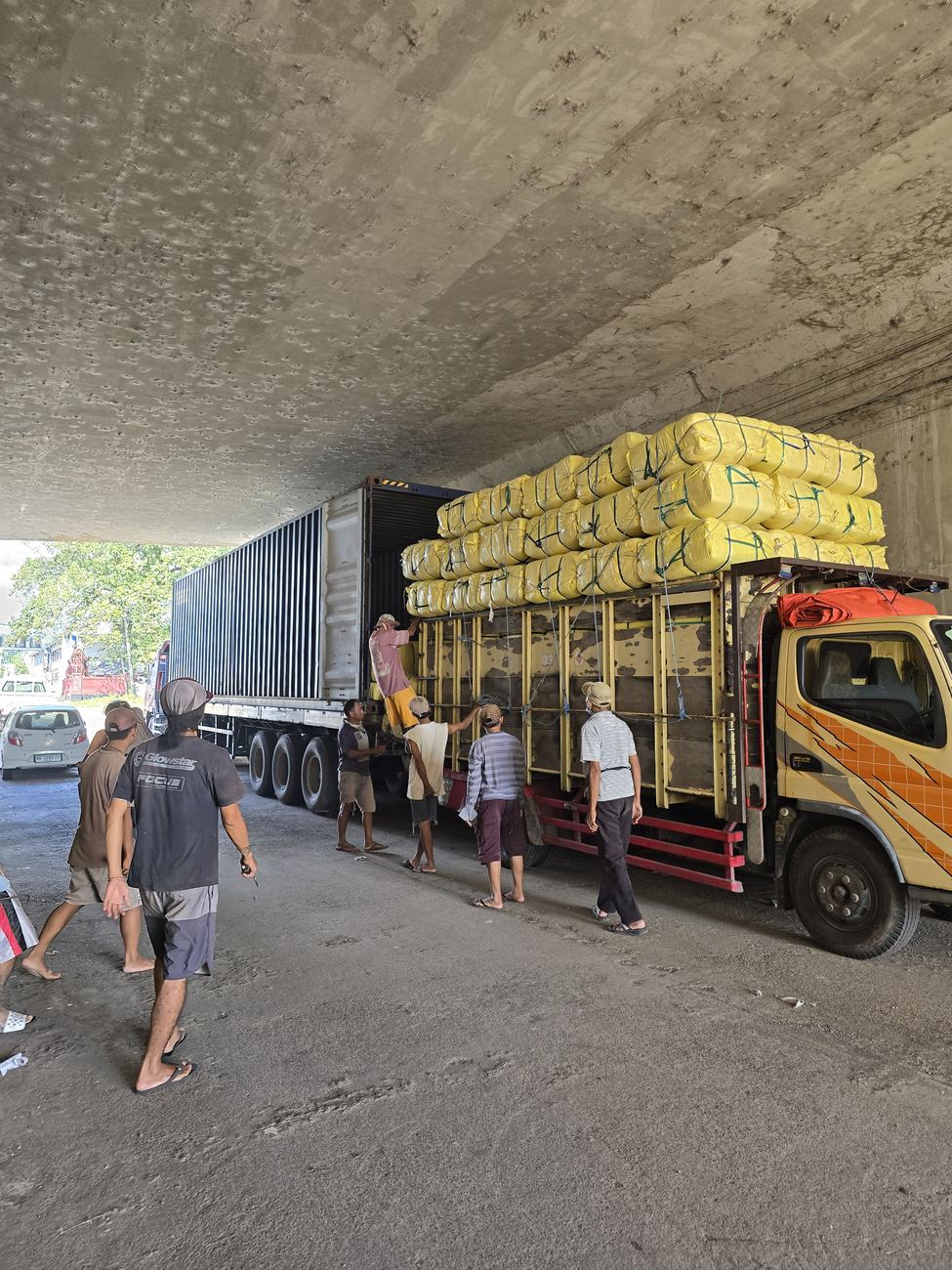
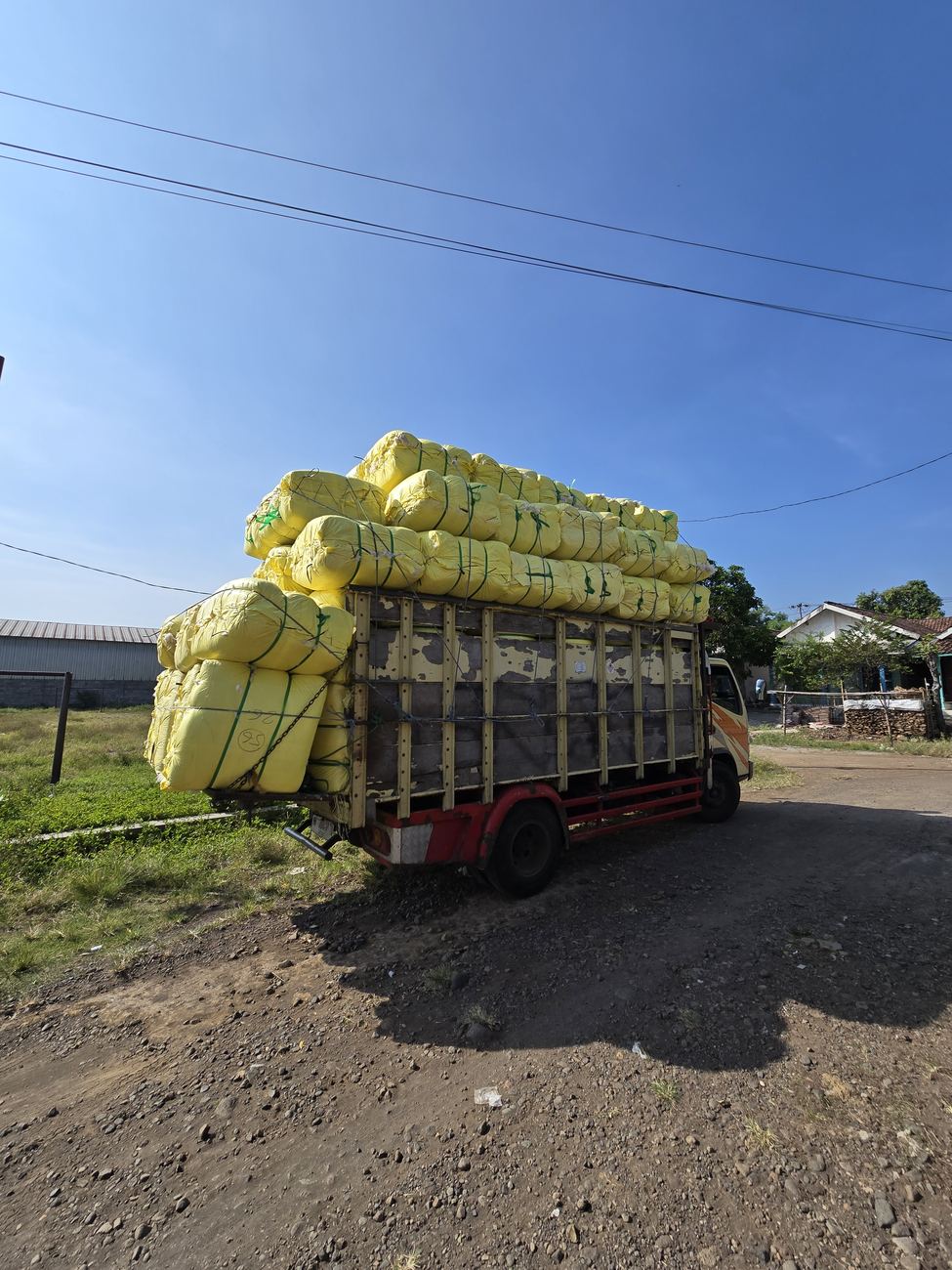
Workers loading pressed kapok bales onto a truck in our East Java warehouse
Inside our East Java gudang — workers, stacked sacks, and loose kapok floss Workers loading sacks of kapok onto a truck inside the gudang

From Java to your port

We don't just grow kapok. We export it.

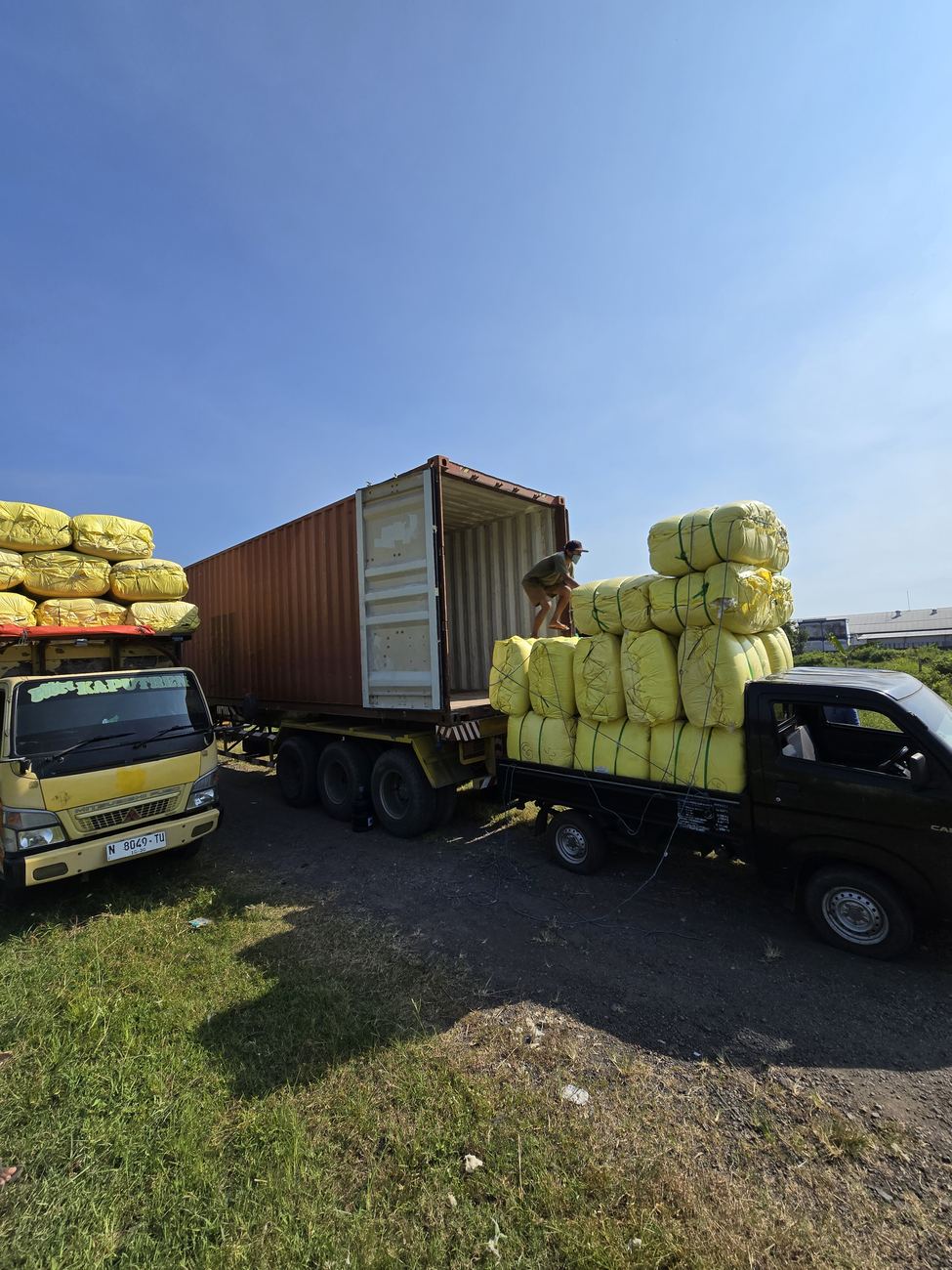
Every order is baled, bagged, and loaded by our own team in East Java, then sealed into containers for export. Minimum order depends on bale size — from one 20FT container. Mixed Grade A/B available on request.

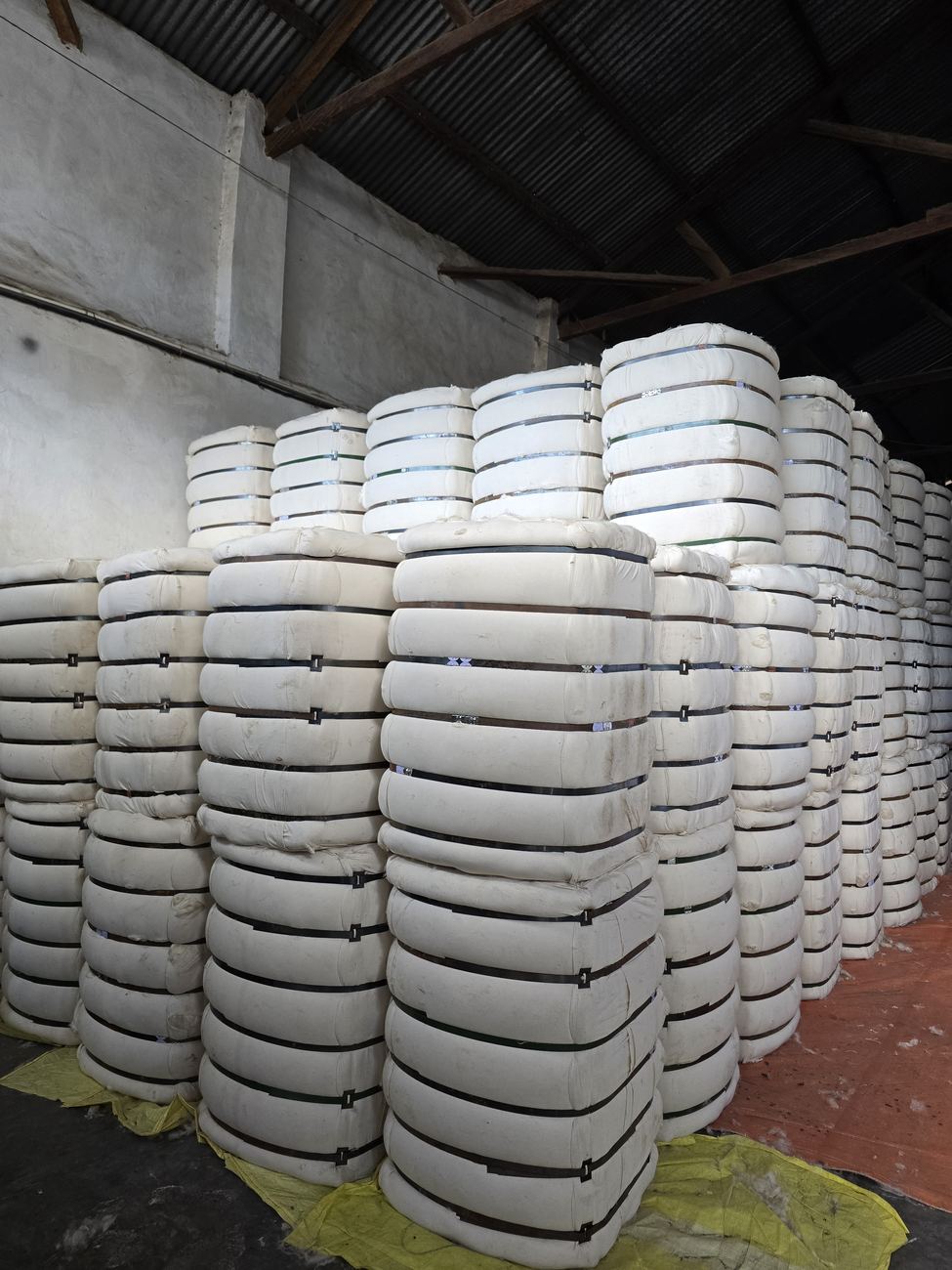
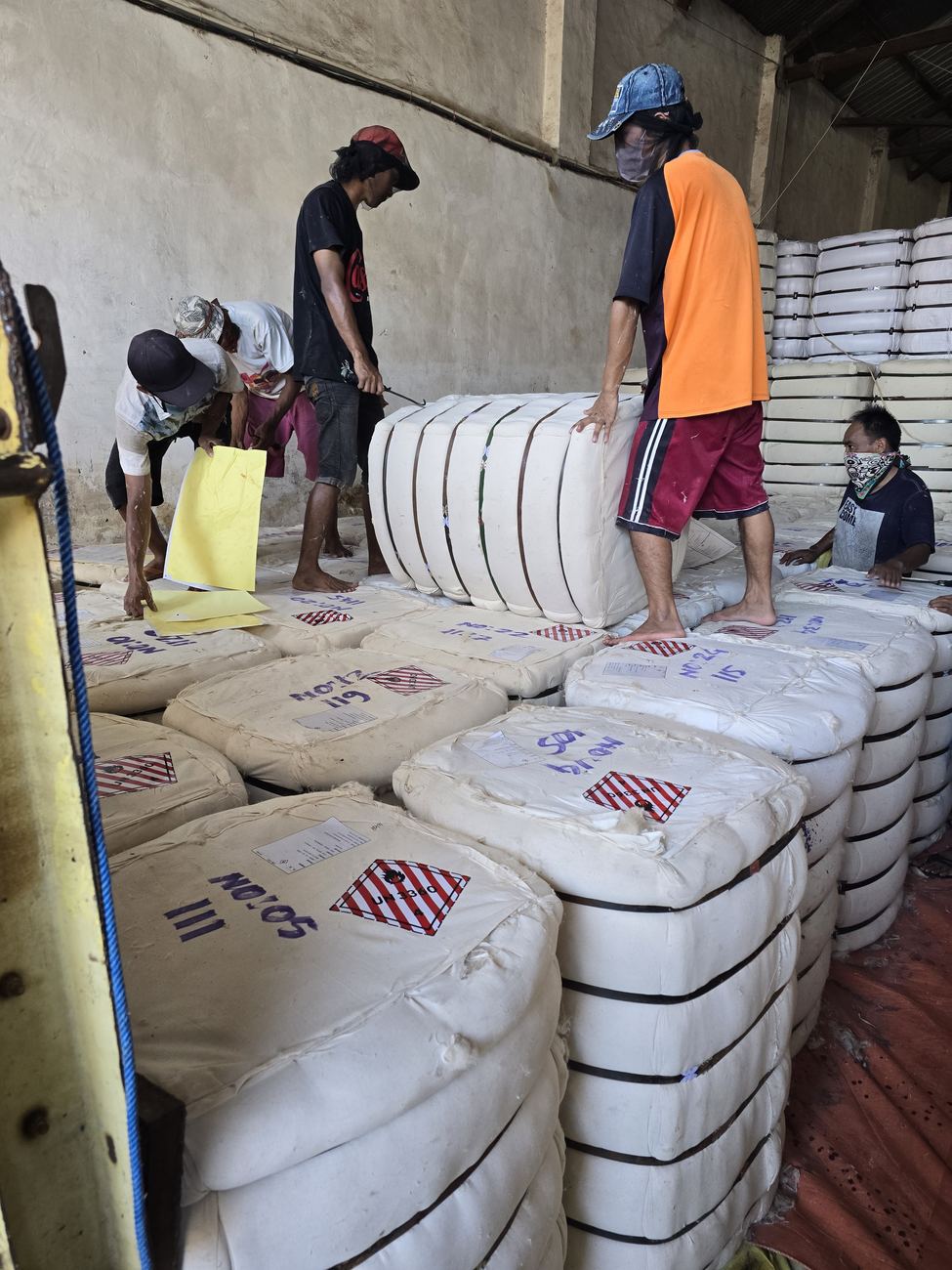
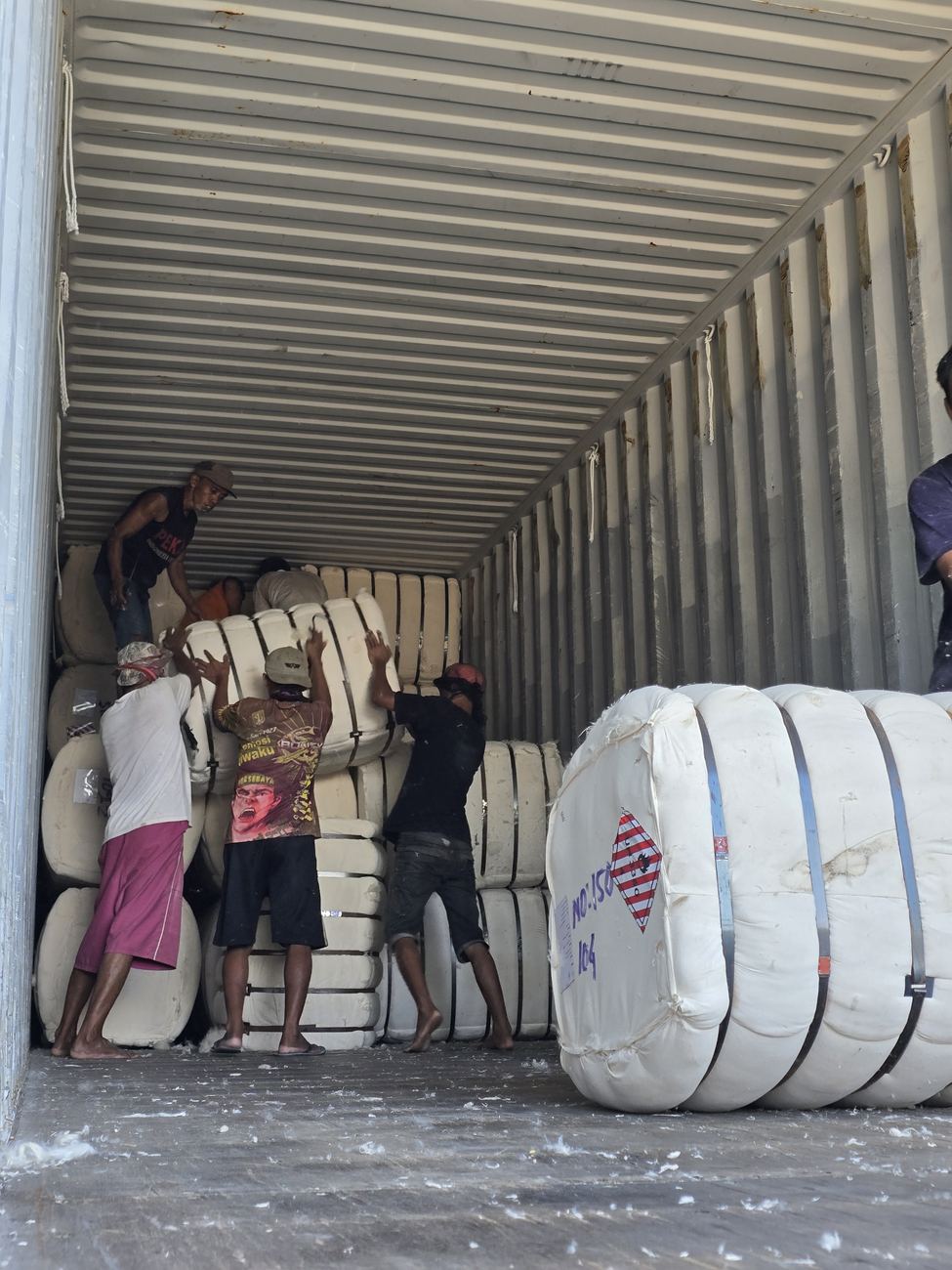
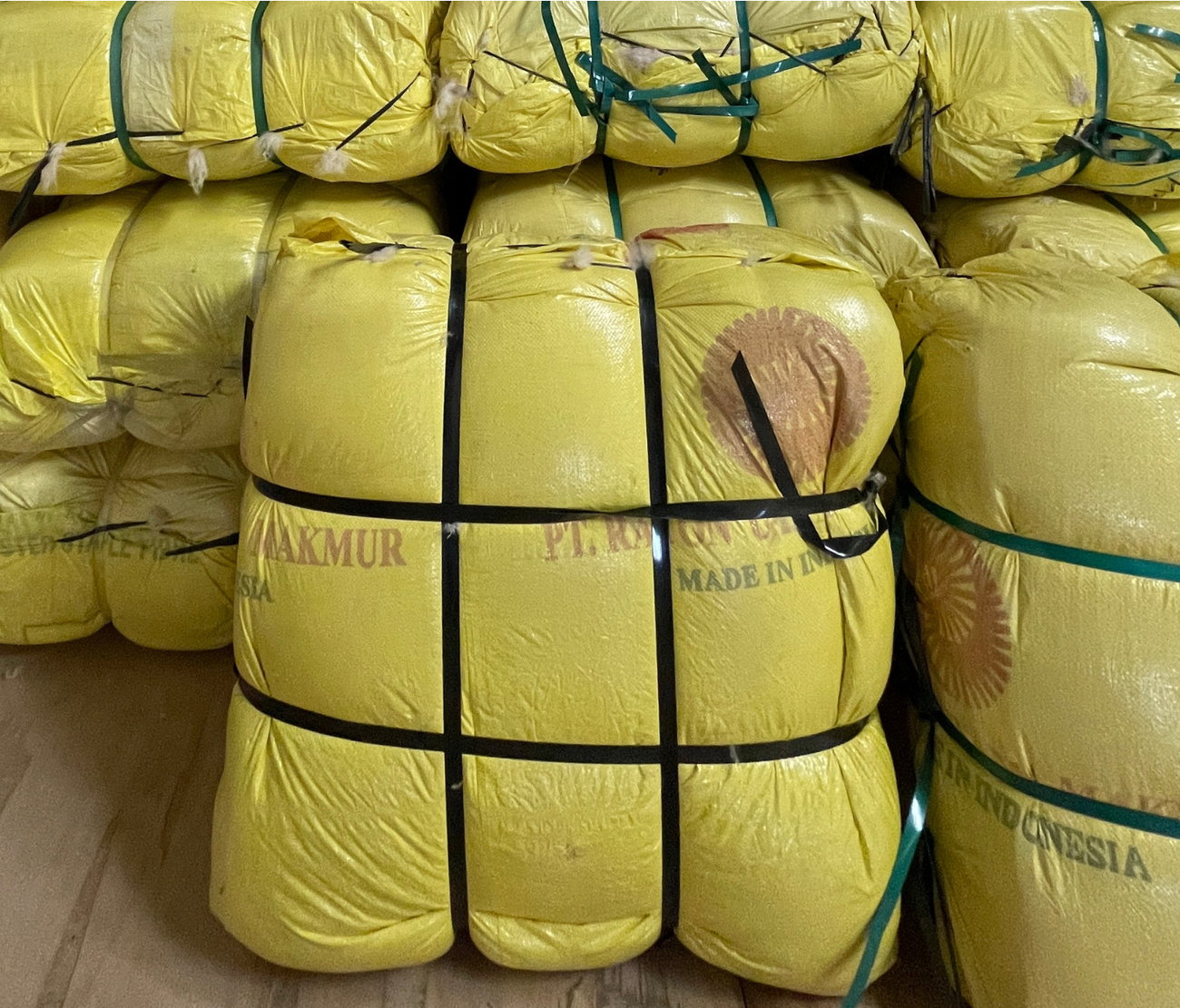
Kapok bales stored in our warehouse, ready to ship Sorting and tagging bales by grade before loading Loading pressed bales onto the truck Stuffing the export container by hand Our team loading a container for the port A fully loaded truck leaving for the port
From 1 × 20FT
Minimum order — depends on bale size
Grade A & B
Sorted, or mixed to your ratio
Baled · FOB
Pressed bales in woven bags · FOB / CIF

Packing

Five ways to fill a container.

Bale size decides how much fiber fits in a container — and how much freight you pay per kilo. Choose the format that suits your handling and your volume.

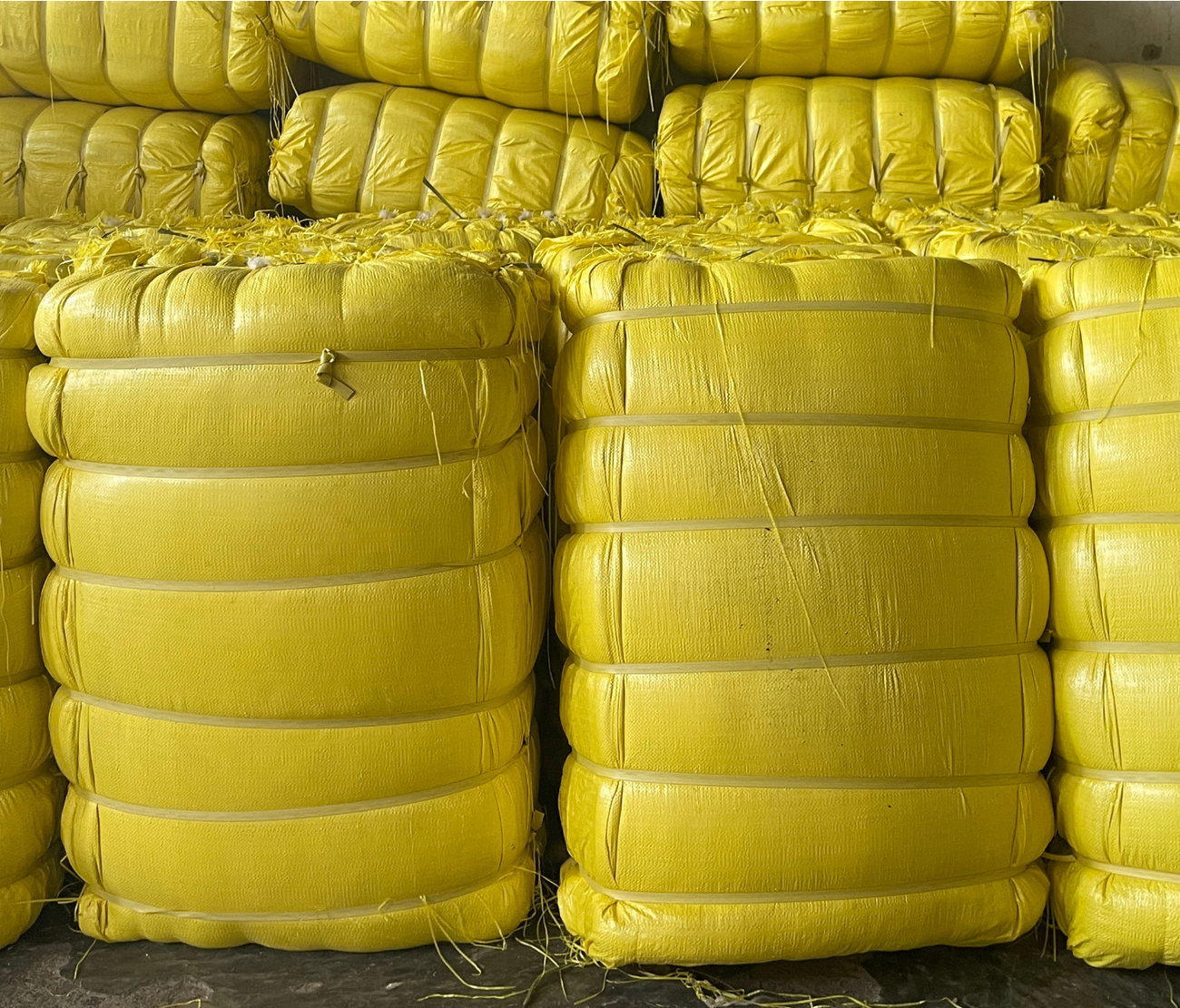
25 kg kapok bales in yellow PP wrap
25 kg
Yellow PP wrap
40HC7,500 kg
MOQ1 × 40HC
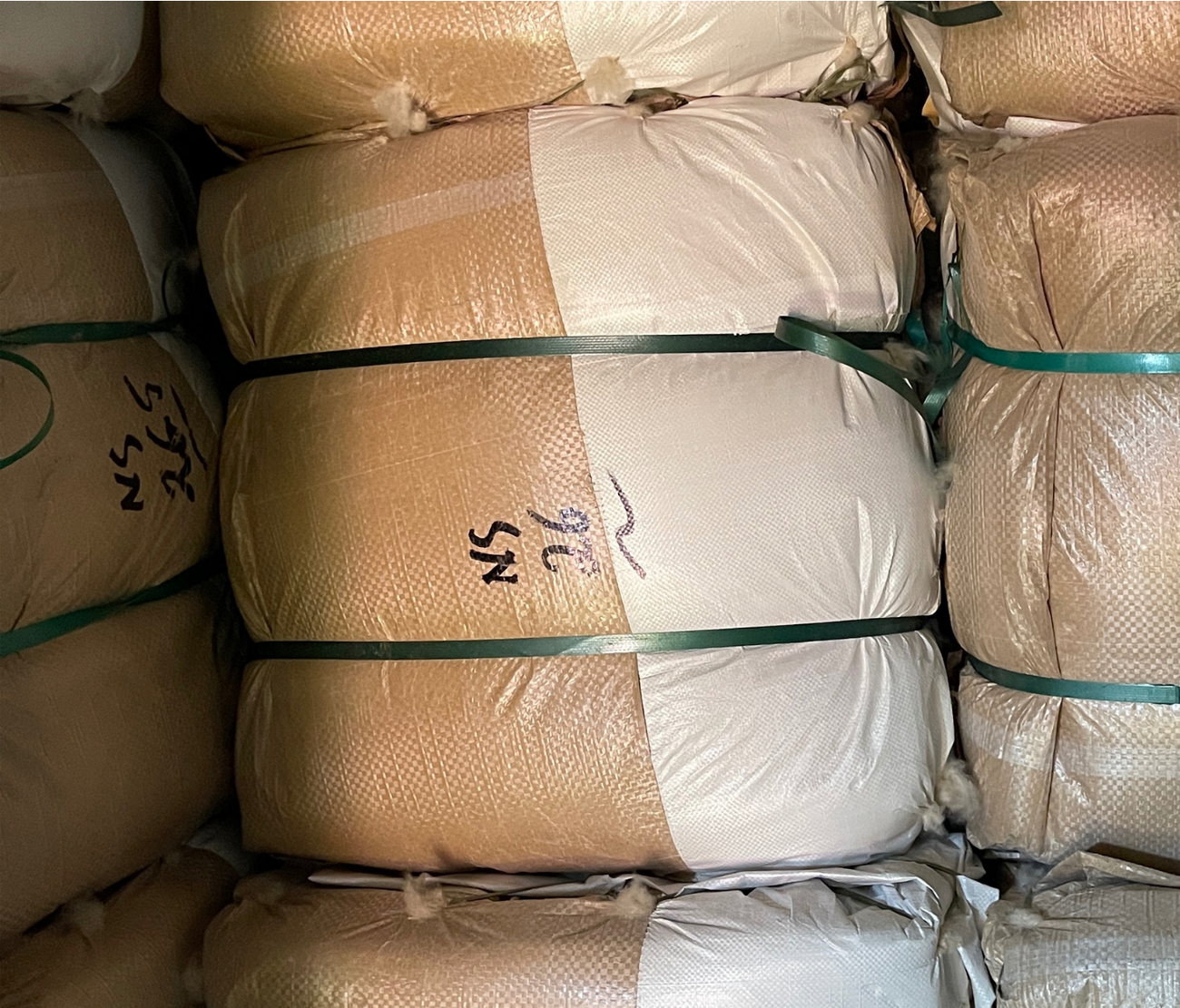
25 kg kapok bales in white PP wrap
25 kg
White PP wrap
40HC7,500 kg
MOQ1 × 40HC
50 kg kapok bales in yellow PP wrap
50 kg
Yellow PP wrap
40HC12,500 kg
MOQ1 × 40HC
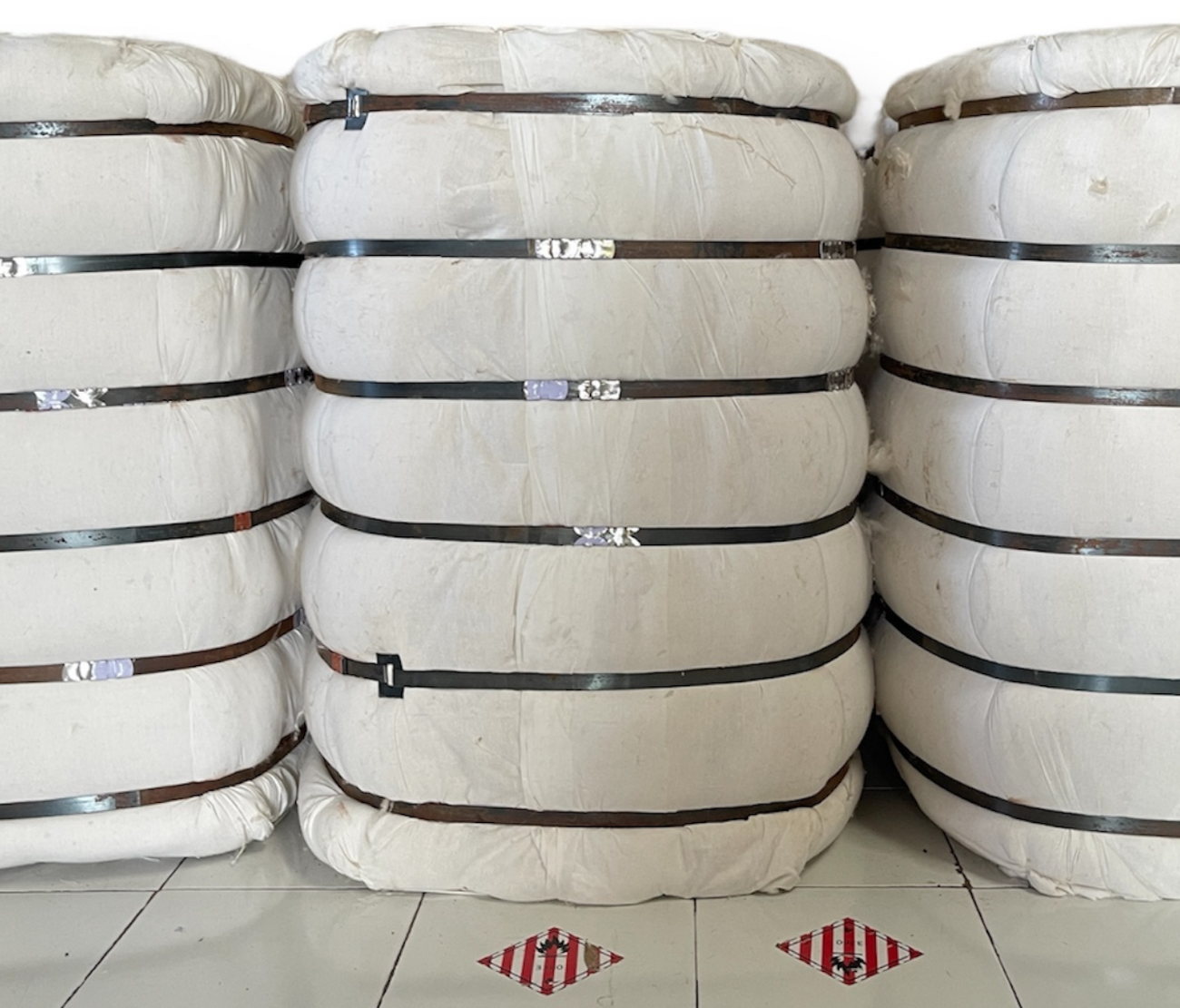
100 kg kapok bales in cotton wrap
100 kg
Cotton wrap
40HC18,000 kg
MOQ1 × 20FT
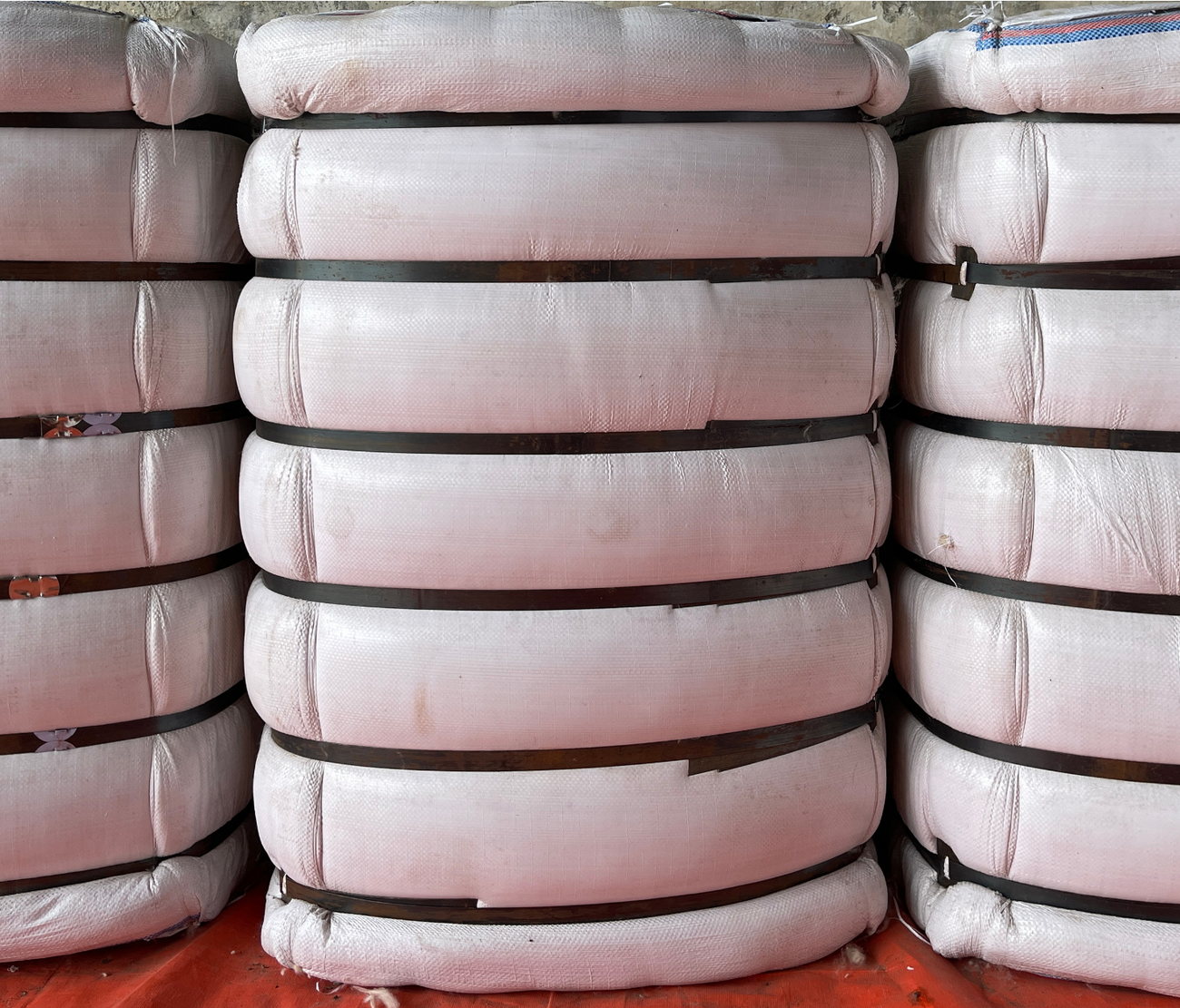
100 kg kapok bales in PP wrap
100 kg
PP wrap
40HC18,000 kg
MOQ1 × 20FT
Why bale size matters: the bigger the bale, the harder it is pressed. A 40HC of 100 kg bales carries 2.4× the fiber of the same container filled with 25 kg bales, so your freight cost per kilo drops sharply. Smaller bales cost more to ship, but are far easier to handle by hand at your end.

What we ship

Two grades of kapok fiber, one honest supply.

Two commercial grades of the same 100% Javanese kapok fiber. Verified specification below, taken from our Safety Data Sheet.

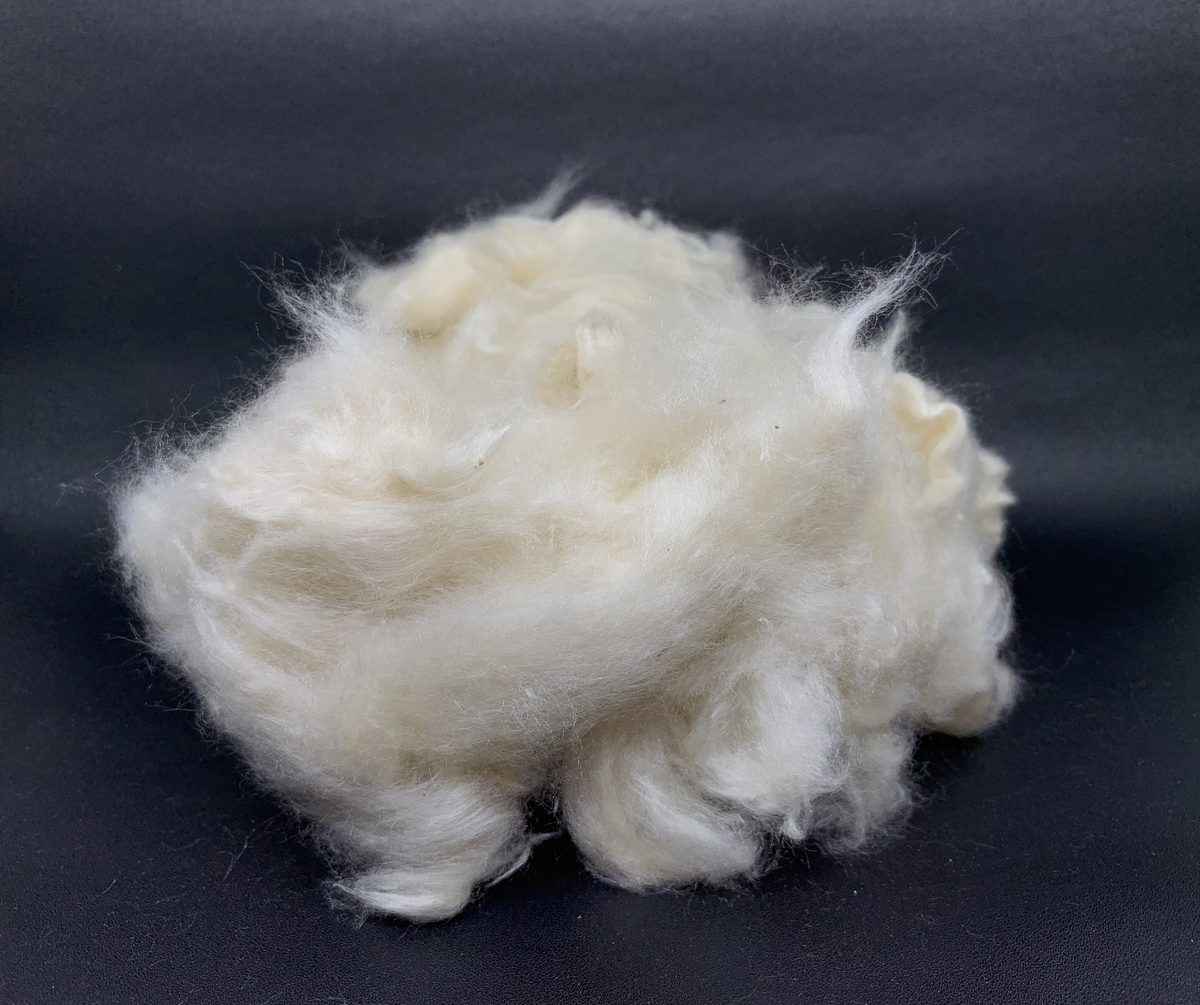
Grade A kapok fiber — clean white floss
Premium

Grade A

Clean · high loft

Our cleanest, whitest floss — well de-seeded and lofted, for premium bedding and pillow fill.

  • Low seed & impurity content
  • Bright, uniform colour
  • High-loft, silky feel
  • Pressed bales, export packed
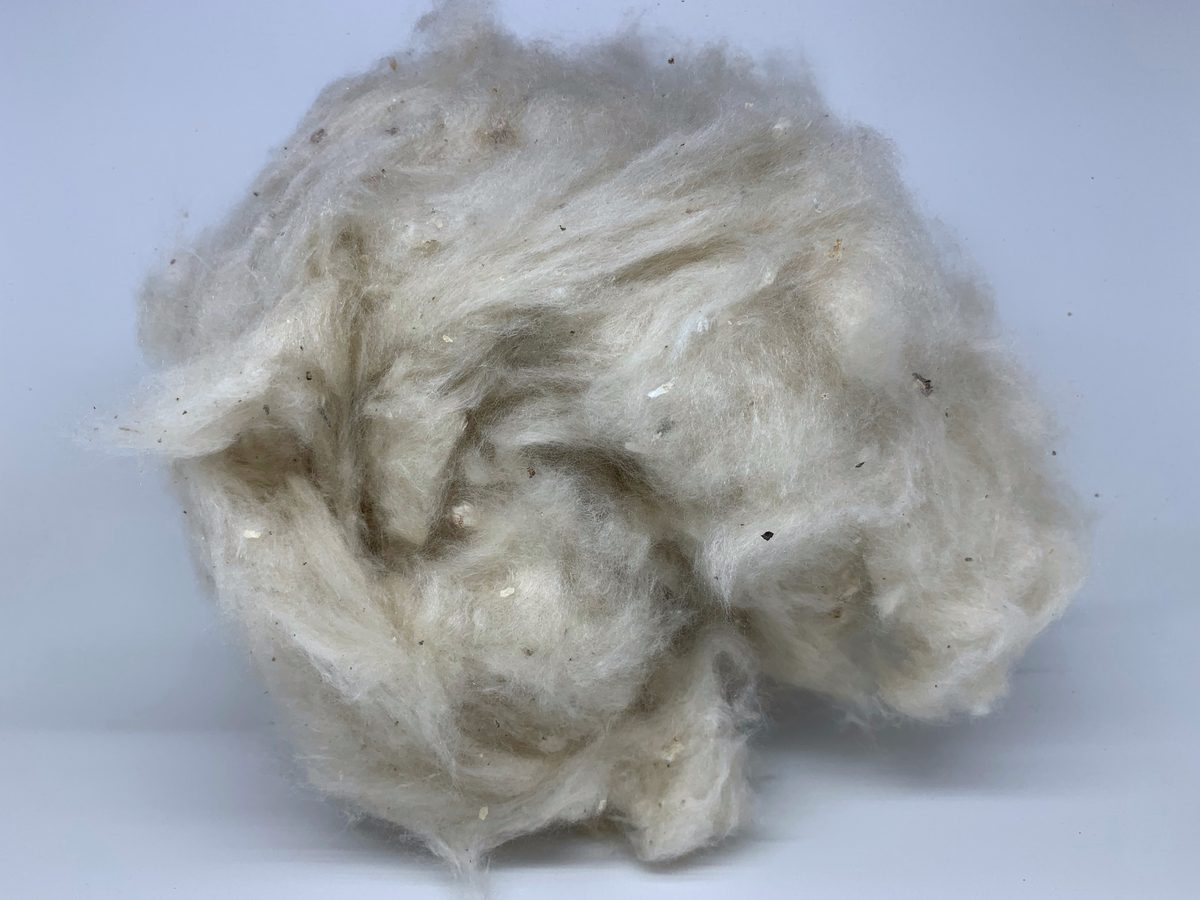
Grade B kapok fiber — value bulk floss
Standard

Grade B

Value · bulk fill

Solid, economical floss for bulk stuffing, insulation, and industrial fill where top whiteness isn't required.

  • Higher yield, better price
  • Suited to volume buyers
  • Baled to order
  • Mix with Grade A on request

Every order backed by paperwork

Full Safety Data Sheet Batch COA per shipment Moisture-checked to spec Properly declared DG · UN 3360

Typical specification

Representative values, per our Safety Data Sheet.

For our kapok fiber (Ceiba pentandra, 100% kapok). Batch COA provided with every shipment.

Composition
100% kapok
Moisture
8.6%
Ash content
1.4 – 3.5%
Water-soluble
4.7 – 9.7%
Lignin
~13%
Colour
White – bright brown

Shipping classification: Kapok fiber is a flammable solid — UN 3360 · IMO Class 4.1 · Packing Group III. We ship it as properly declared dangerous goods, with a full Safety Data Sheet supplied for every order.

Independently lab-tested

Verified by the lab — not just by us.

Every product line is tested by accredited Indonesian laboratories, and a Certificate of Analysis travels with your shipment. No guesswork, no "trust me."

Sucofindo · IDSurvey
Proximate & composition analysis — kapok seed meal (protein, fat, fibre, moisture).
BBSPJIS · Kemenperin
Government Centre for Industrial Standardization — kapok fibre-length testing.
KAN-accredited
Politeknik STTT Bandung
Textile fibre evaluation lab — Keisokki classifiber, per SNI ISO 4913-2010.
Kapok fibre — span length
18–21 mm
Span length 2.5% ~18 mm; fibre length 19–21 mm across BBSPJIS·KAN reports (SNI 01-1840-1990)
Kapok seed meal — crude protein
27.9%
Proximate analysis, AOAC methods · Sucofindo (IDSurvey)

All tests under our own name, PT. Java Kapok Indonesia. Full lab reports available on request.

Where it goes

One fiber, many industries.

Buyers worldwide specify kapok wherever lightness, warmth, water-resistance, or a truly natural fill matters.

Bedding & pillows

Loft, breathability, and a hypoallergenic natural fill for mattresses, pillows, and bolsters.

Insulation

A breathable, plastic-free thermal and acoustic fill for natural-material products.

Marine & buoyancy

The original life-vest fiber — naturally floating fill for flotation products.

Oil absorption

Wax-coated hollow fibers repel water but hold oil — used in spill cleanup and filtration.

Upholstery & craft

Traditional cushioning and stuffing for furniture, toys, and artisan makers.

Sustainable textiles

Blended with cotton or spun into eco yarns for fully natural product lines.

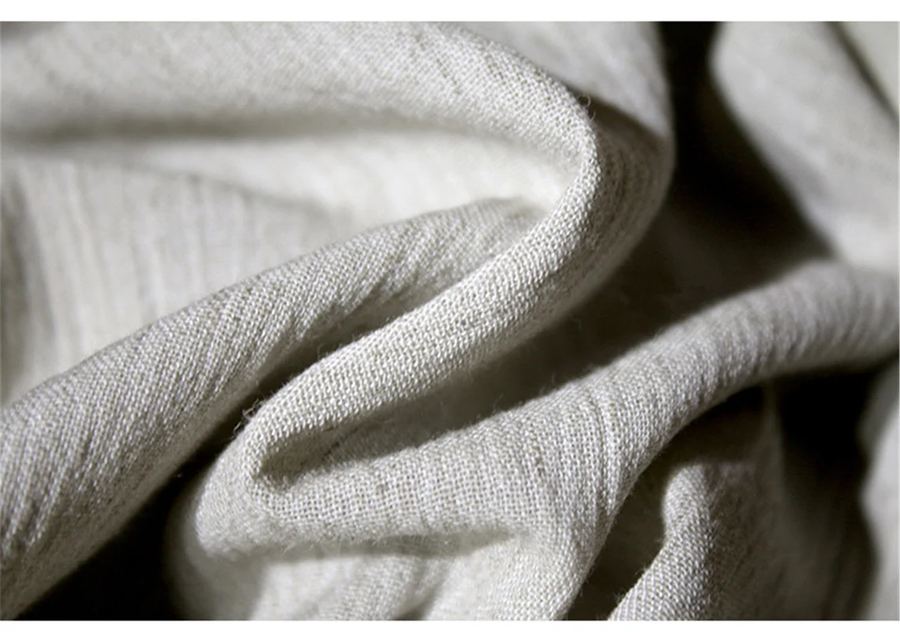
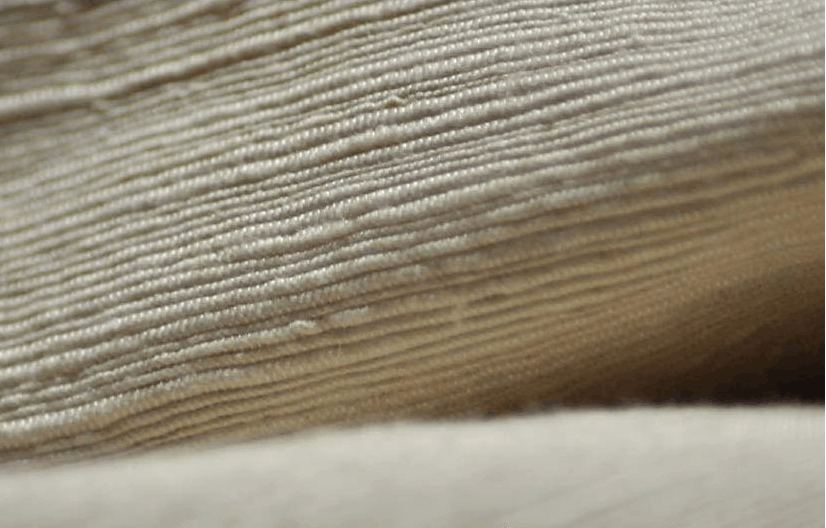
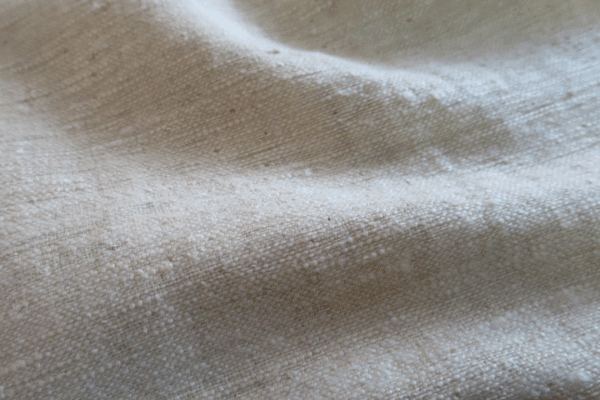
Kapok-cotton linen fabric Kapok woven fabric texture Kapok blended fabric

Questions buyers ask

Kapok fiber, answered.

What is the minimum order?

Minimum order depends on bale size — from one 20FT container for 100 kg bales. Smaller 25 kg and 50 kg bales are supplied from one 40HC.

What is the difference between Grade A and Grade B?

Grade A is our cleanest, whitest, high-loft floss for premium bedding and pillow fill. Grade B is a solid, economical floss for bulk stuffing, insulation, and industrial fill. Both are 100% Javanese kapok and can be mixed to your ratio.

How much kapok fits in a container?

A 40HC of 100 kg bales carries about 18,000 kg — roughly 2.4× the fiber of the same container filled with 25 kg bales, because larger bales are pressed harder. Larger bales lower your freight cost per kilo.

How is kapok classified for shipping?

Kapok fiber is a flammable solid: UN 3360, IMO Class 4.1, Packing Group III. We ship it as properly declared dangerous goods with a full Safety Data Sheet for every order.

How is kapok different from cotton?

Each kapok fiber is a hollow, wax-coated tube — roughly four-fifths air — making it far lighter than cotton, naturally buoyant, and water-repellent. It is gathered from the pods of the randu tree without felling the tree or using pesticides.

From the gudang

What's moving right now.

Real updates from our warehouse in East Java — new stock, equipment, and shipments as they happen.

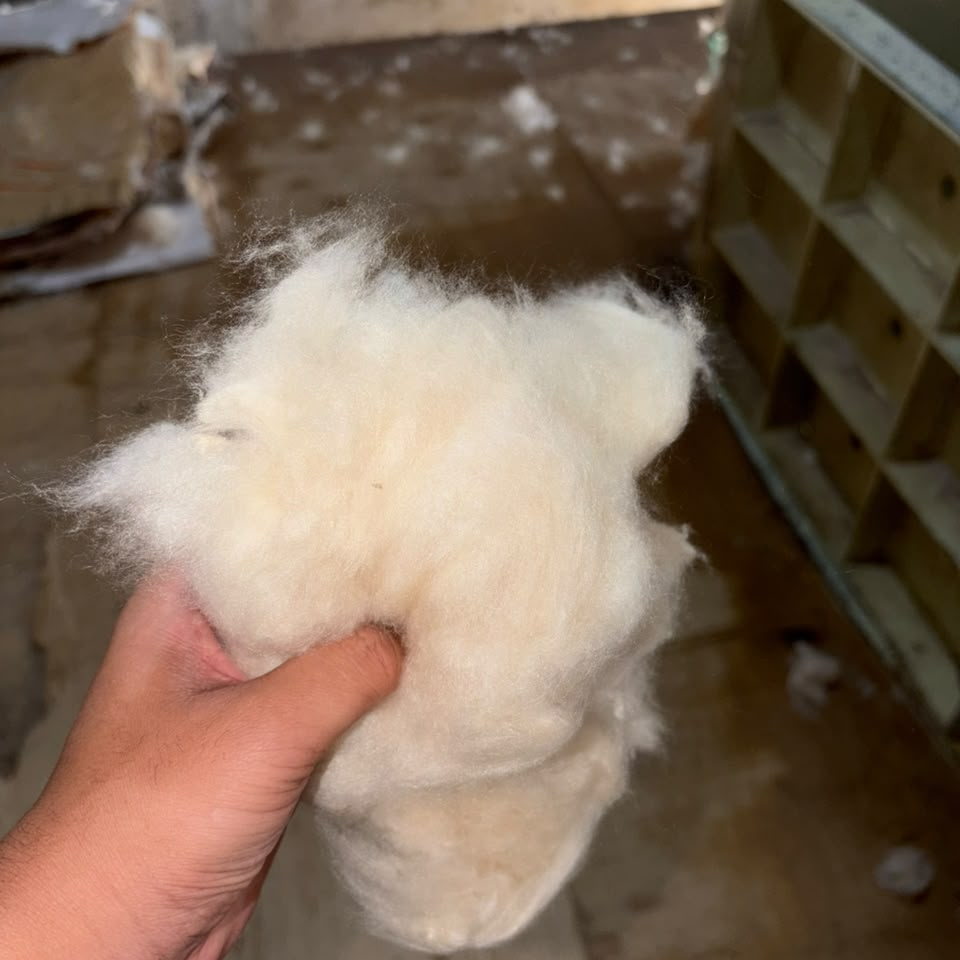
Clean high-loft kapok floss held by hand
Quality

Straight from the bale

Clean, de-seeded floss with the loft buyers look for — checked by hand before it leaves the gudang.

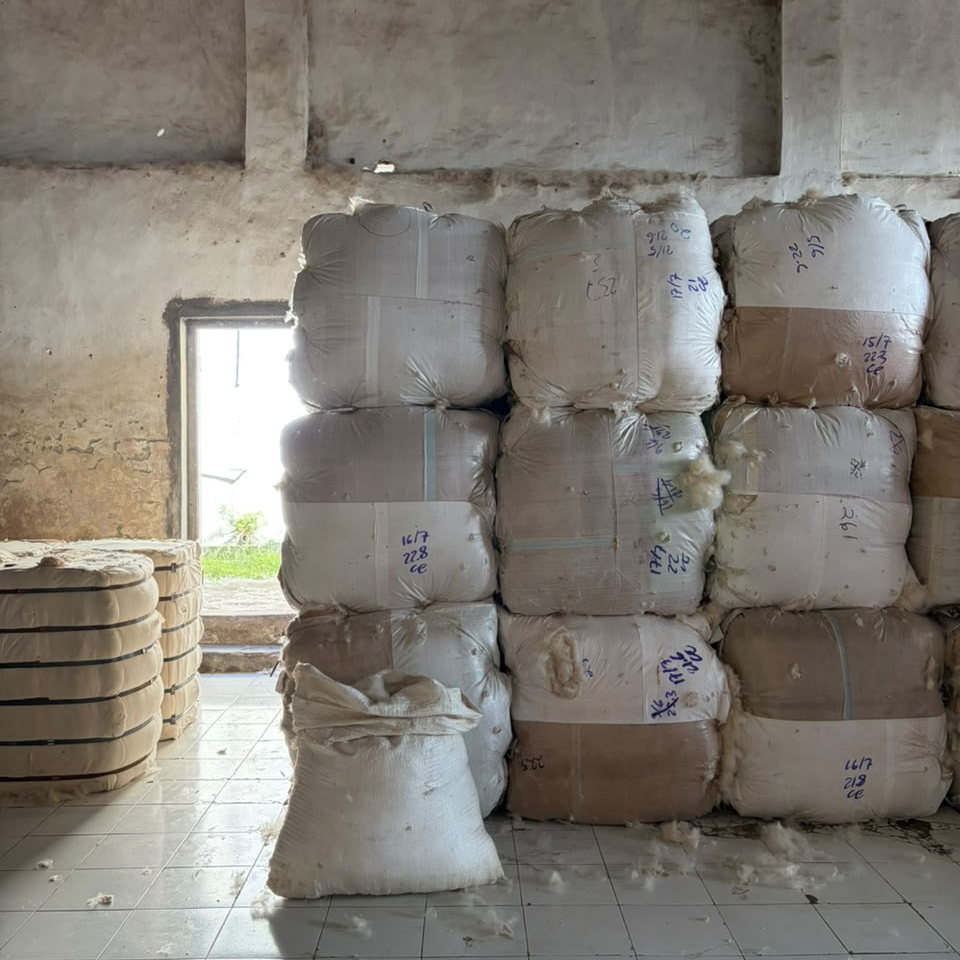
Kapok bales stacked and marked in our East Java warehouse
Stock

Warehouse stocked and marked

Bales weighed, marked and stacked — ready to allocate against confirmed orders.

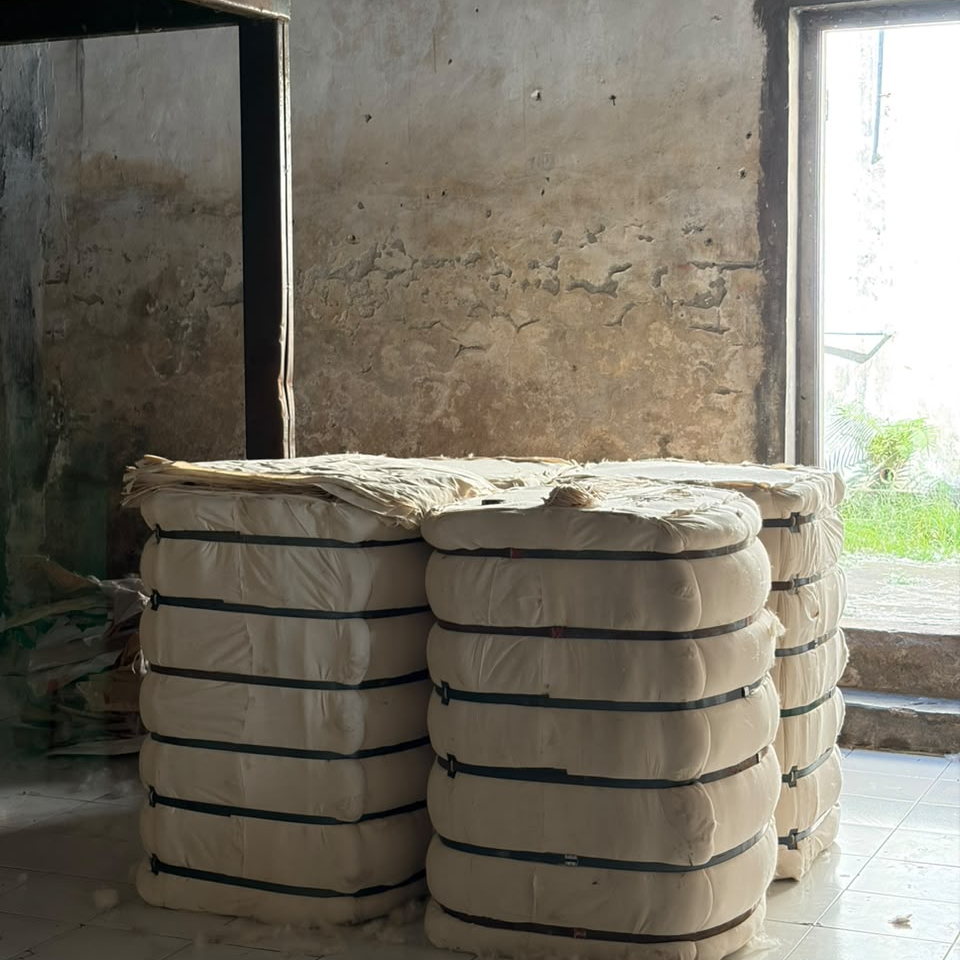
100 kg cotton-wrapped kapok bales strapped for export
Packing

100 kg bales strapped for export

Cotton-wrapped and steel-strapped, pressed to load 18,000 kg into a single 40HC.

One harvest, three products

Nothing goes to waste.

The randu harvest gives more than floss. From the same pods we supply the whole chain — the fibre for bedding, the seed pressed for oil, and the meal left after pressing for feed and fertilizer.

Building a product line around any of these? Ask us about availability →

Grown, not manufactured

Kapok, sustainable by nature — not by claim.

Kapok doesn't need a sustainability program bolted on. The randu tree grows on land that grows little else, needs no irrigation or spraying, and keeps standing while it fruits — for decades.

The tree is never cut

Only gathered pods are harvested, year after year.

Zero pesticides

Randu grows without chemical inputs or irrigation.

Fully biodegradable

A plastic-free fill that composts at end of life.

Rural livelihoods

Sourced through Javanese growing communities.

Let's talk kapok

Tell us what you need.

Your application, volume, and destination port. We'll come back with full specs, our Safety Data Sheet, and current pricing.

WhatsApp +62 816-1525-1270
Send enquiry →

We reply with specs, SDS, and pricing — usually same day.

Chat on WhatsApp