In short
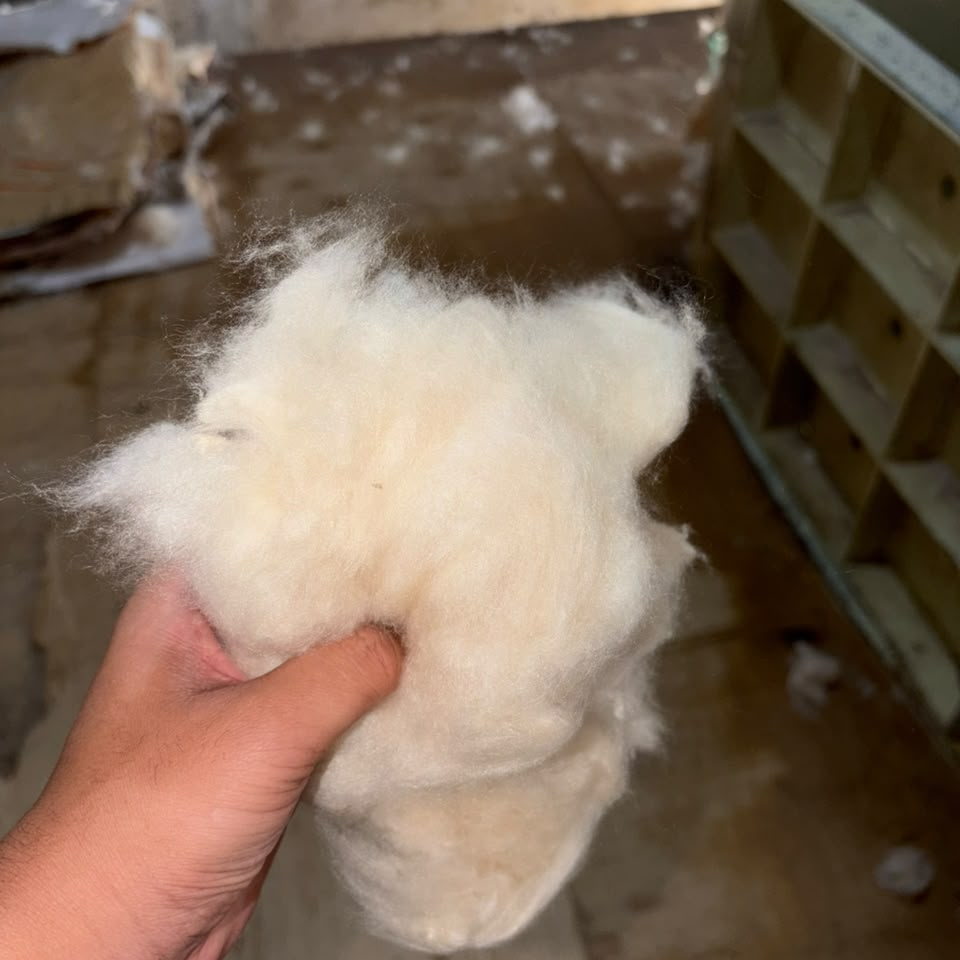
Kapok makes a premium natural bedding fill: it's light and lofty, breathable, naturally resistant to dust mites, and 100% plant-based. For pillows and premium mattresses, most manufacturers specify our cleaner, higher-loft Grade A; for bulk or budget lines, Grade B or an A/B blend.
Bedding is the single biggest market for kapok, and for good reason. Long before polyester, kapok filled the pillows and mattresses of Southeast Asia — and today, buyers who want a genuinely natural, breathable, hypoallergenic fill are coming back to it. If you manufacture pillows, bolsters, or mattresses, here's what you need to know to buy it well.
Why kapok works so well in bedding
Each kapok fiber is a hollow, wax-coated tube — roughly four-fifths air. That structure gives it four qualities bedding buyers care about:
- Loft & lightness. Kapok fills a pillow with springy, cloud-like volume at a fraction of the weight of cotton — a soft, airy feel that lofts back up after use.
- Breathability. All that trapped air lets a pillow or mattress breathe, staying cooler and drier than dense synthetic fill.
- Naturally hypoallergenic. Clean, dry kapok is inhospitable to dust mites and is generally well tolerated — a strong selling point for allergy-friendly bedding.
- 100% natural. No plastics, no microplastics shed in the wash, fully biodegradable — exactly what "natural bedding" lines are built on.
Which grade for which product
Match the grade to where the fiber ends up and how premium the line is:
- Premium pillows & toppers → Grade A. The cleanest, whitest, highest-loft floss, where feel and appearance are part of the product.
- Mattress cores & bulk fill → Grade B, or an A/B blend to hit a target feel and price. Inside a ticking, top whiteness matters less than value and volume.
- Custom feel → ask for a blend ratio (say 60/40 A/B). We can mix to your specification.
See the full Grade A vs Grade B breakdown →
How much kapok do you need?
As a rough starting point, a standard bed pillow takes on the order of 0.8–1.2 kg of kapok depending on firmness, and a mattress far more by volume. Because kapok is so light, a single container holds a lot of finished-product fill — which is why bale size matters to your landed cost. Larger, harder-pressed bales carry more fiber per container and lower your freight per kilo. More on bale sizes & importing →
Sourcing it right
For bedding, consistency matters: you want the same clean loft and moisture level batch after batch. Buy from a supplier who grades by hand, checks moisture against a spec, and provides a Certificate of Analysis with every shipment — so the fill in your pillows this month matches last month's. That's how we ship it, straight from our own gudang in East Java.
Building a natural bedding line around kapok? Tell us your product and volume and we'll recommend a grade or blend, with specs and pricing.